Sponsored Ad

Ad 1
Ad 2
Ad 3
Ad 4
Ad 5
Ad 6
30.8 C
Kenya
Sunday, April 26, 2026
Home Blog Page 6080

First Lady Margaret Kenyatta calls for special protection of Elephants and Rhinos

First Lady Margaret Kenyatta today said our unique wildlife heritage sets the country apart from the rest of the world and should be accorded special protection for the sake of the economy and future generations.

She described Kenya’s expansive wildlife species, notably elephants and the rhinos, as a  special gift from God to the country. 

The First Lady said Kenyans will have failed their country and future generations in a big way if they won’t be able to secure their elephant and rhino population from extinction.

“If we fail and find the environmentalists’ predictions of extinction of our precious wildlife, especially the elephant and rhinos to be true, we shall have truly failed our future generation – our children and children’s children,” said the First Lady.

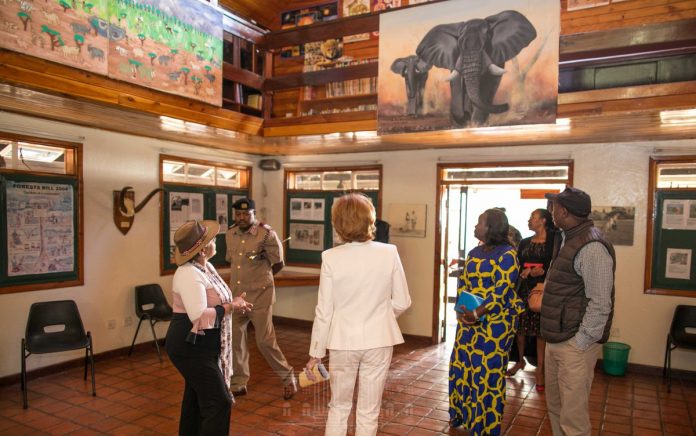
She spoke in Nanyuki , during celebrations to mark the 35th anniversary of the William Holden Wildlife Foundation (WHWF).

The Late William Holden, one of America’s biggest Box Office Film and TV actors and celebrated Academy Award Winners of the 1950s and 1960s, was one of the leading conservationists in Kenya.

He visited Kenya as a hunter in 1954, fell in  love with the country’s wildlife, and decided to dedicate his life to conservation through the Mount Kenya Game Reserve.

Upon his death in 1981, his partner and former actress Stefanie Powers founded the William Holden Wildlife Foundation to continue the work of the renown conservationist. She is currently the president of the foundation.

WHWF is a not-for-profit organization whose principal project is the William Holden Education Centre in Nanyuki which is dedicated to wildlife conservation and environmental studies for local people and occasional visits from international groups.

The centre focuses on the educational component of wildlife and environmental protection and habitat protection. It lays great emphasis on practical methods of sustainable accessibility to all.

Besides protection of the endangered animal species including the mountain bongo, the centre undertakes research in animal reproduction using captive breeding programs. The centre also runs an animal rescue centre to care for orphaned animals.

“I applaud the work of the Foundation in its innovative Wildlife Education program that has served over one million people, mostly Kenyans to learn about the importance of protection and conservation,” said the First Lady who took time to familiarize herself with the work of the foundation.

Over 11,000 students from all over the world visit the centre each year. | PSCU


Over 11,000 students from all over the world visit the centre each year.

The First Lady said the centre, along with the activities it supports is an exemplary demonstration of the sustainable utilisation concept that helps communities to protect a resource besides reaping huge benefits from the asset. 

“This program has been very impactful to educate and equip communities living with wildlife to participate in wildlife protection,” said the First Lady.

The centre supports local schools through infrastructural development and distribution of books and other learning materials and equipment. 

First Lady Margaret Kenyatta paid tribute to the late Holden whom she described as a great champion of conservation work and praised Ms Powers (who was the host) for protecting Holden’s legacy through the work of the WHWF.

“I congratulate Stephanie Powers, for your remarkable vision to protect William’s legacy, his vision, and his passion, through the William Holden Wildlife Foundation,” the First Lady said adding that the late Holden remains a great inspiration to those who knew him and his contributions in conservation.

She said Holden’s initiatives were a good example of what citizen activism means, environmental stewardship and making a difference.

The First Lady who is a great champion of wildlife conservation, is the patron of the “Hands Off Our Elephants” campaign that brings together government agencies, the civil society and other conservation organization in a unified approach towards ending  the poaching crisis in Kenya.

Since 2013 when the campaign was launched, it has succeeded in generating unprecedented public and political awareness and support for wildlife conservation.

Others who spoke at the ceremony included Ms Powers, Principal Secretary for Wildlife  Dr. Susan Koech, Laikipia Governor  Nderitu Mureithi, Nyeri Deputy Governor Caroline  Karugu, Laikipia County MP Catherine Waruguru, Laikipia North MP Sarah Korere and National Environment Management Authority  (NEMA) Director General Prof. Geoffrey Wakhungu

Songs of freedom: The soundtracks of political change in Sudan

Mohamed A. Satti, American University of Kuwait

The uprising in Sudan has been vocal – and musical. “Tasqut bas!” – just fall, that’s all – was a commonly-used slogan by Sudanese as they revolted against military dictator Omar al-Bashir’s 30-year rule. The uprising, which began in December 2018, intensified over the following weeks, forcing Al-Bashir to step down on 11 April 2019.

Sudanese played a crucial role as they camped in front of the compound housing the military and security services in central Khartoum. For five days, the protesters refused to budge until the army removed the president from power.

During the days in early April, when the revolution gathered steam, the government expelled most international media outlets. So it was up to the citizens to capture the uprising on cellphones. These cellphone images and videos were soon circulated on social media platforms to Sudanese in the diaspora and to a global audience. Local media outlets continued with regular programming despite the government’s efforts to impose a media blackout.

Cellphone footage from the heart of the revolution all contained one thing in common: the familiar beat of music. This was to be expected. Sudanese music has always been heavily laden with political rhetoric.

The saying goes that everyone in Sudan is a politician, in reference to how politics creeps into everyday conversation. Sudanese also tend to be musically savvy and are inclined to know the lyrics to many popular songs by heart.

Previous revolutions in the country have been marked by particular songs. That hasn’t been the case this time, although the protesters chanted slogans to music that was accompanied by the persistent beat of drums.

Politics and music

The link between music and politics is not new to Sudan.

One of the earliest examples of how powerful lyrics drove political change was a poem entitled “Umm Dhafayir” – The Lady with Pleated Hair – by Obeid Abdul Nur, an educator and a poet.

Written in 1924, the poem urged Sudanese to rise up and fight against British occupation. The eloquently-articulated words highlighted the importance of the nation and urged the youth to fight for their homeland. Perhaps Abdul Nur’s rousing words provided inspiration to others to integrate political content in their lyrics.

‘October Al Akhdar by Mohammed Wardi.

“October Al Akhdar” (Green October) was famously performed by the revered singer Mohammed Wardi during the 1964 revolution that overthrew a military government and ushered in a civilian one. The song’s lyrics applaud the power of the people to bring about political change. The use of the word “green” in the title was a direct reference to agriculture and its importance to Sudan’s economy.

In 1985 Sudan again underwent change in its leadership through a popular uprising. Again the people took to the streets to oust a military government. Again elections ushered in a civilian government. And again, songs played a central role in the revolution.

Wardi’s lyrics played a powerful role this time too. His song “Ya Sha’aban Lahabak Thouritak” – which loosely translates to “Oh People Your Flame is Your Revolution” – referred to the immense pride and confidence Sudanese people have in their abilities. In the song Wardi yearns for Sudan’s population to stand up and to speak up for itself and to control its own destiny. The words empowered Sudanese to realise their ability to work for the good of the country with resolve and purpose.

Wardi died in 2012. The legendary singer is still celebrated as “The Last King of Nubia”.

Using songs

Sudan has endured a total of almost five decades of military dictatorship since its independence in 1956. Its people yearn for political freedom.

Democratic civilian governments have never been allowed to serve out their time in office. Songs are therefore used to instil belief in the population. Music seems to lessen the pain and suffering during difficult times.

What the revolutions of 1964, 1985 and 2019 have demonstrated is that political and economic hardships push people to defy the government.

But songs also have a unifying power. The 2019 uprising is a testament to that. Shouts of “hurriyya” (freedom), “shaabun wahid jayshun wahid” (one people, one army) and “al shaab yurid ‘isqat al nizam” (the people want to overthrow the regime) were repeatedly heard.

These slogans and lyrics were often accompanied by the beat of drums, the shuffling of feet and the swaying of hips. On the day that al-Bashir was expelled, a video circulated of a group of protesters playing music. One was playing a saxophone while another beat on a drum. Those around joined in the festivities.

In 2019, songs provided motivation and guidance. Protesters in Sudan could easily have been dissuaded from pursuing their goal of instigating regime change. Al-Bashir’s three decades in power made him a cunning and wily power broker and the fear was that another uprising could be crushed like many before it. The removal of al-Bashir from power to be replaced by his defence minister isn’t the kind of democratic change that the protesters were looking for and it remains to be seen how the scenario will unfold in the coming days.

But whatever happens, the protesters have persevered, united by a common goal and guided by nationalist songs of freedom – songs that will ultimately be etched in Sudan’s history records.The Conversation

Mohamed A. Satti, Assistant Professor of Communication and Media, American University of Kuwait

This article is republished from The Conversation under a Creative Commons license. Read the original article.

VIDEO: From waste to gold : The story of Victorious Creatives Group

Deep in the heart of Kibera, a family united by association is converting waste materials into useful products like jewellery. They sell these kjewelleries to earn a living and be able to cater for their families.

VIDEO: How Kenyans reacted to Raila- Ruto Handshake allegations

The Uzalendo team went to the streets to ask of the opinion of Kenyans concerning Ruto’s allegations that Raila approached him for handshake

Involve all stakeholders in wildlife conservation, First Lady Margaret Kenyatta says

First Lady Margaret Kenyatta has called for a shift in approach and tact in the protection of wildlife resources in the country.
She said a sustainable solution that effectively engages all key stakeholders including local communities as equal partners is crucial in bolstering wildlife conservation efforts in the country.
“The subject of conservation continues to be a delicate and complex one that calls for complimentary capabilities of diverse groups including policy makers, philanthropists, conservationists, the civil society, the media and local communities,” she said.
The First Lady was speaking on Thursday evening when she presided over the main screening of a documentary titled ‘Ivory Belongs to Elephants Walk’. The 25-minute documentary covers the experiences of Mr Jim Justus Nyamu, the Executive Director of Elephant Neighbours Centre, who has so far walked 15,411 kilometres in eight countries to raise awareness on the need to protect the African elephant.


The First Lady termed the documentary a significant milestone that will raise global awareness on the plight of the African elephant.
“I congratulate the Elephant Neighbor’s Centre, led by Jim Nyamu, for the tireless effort, the energy and the courage. The advocacy walks of thousands of miles across Africa, Europe and America to educate and inform the world about our responsibility to nurture nature has been a true demonstration of the campaign’s resilience,” First Lady Margaret Kenyatta said.
She expressed optimism that the documentary will help draw the world’s attention to the campaign to save elephants and other iconic species for future generations as well as cultivate hope that the ongoing conservation efforts are not in vain.
The First Lady, who is also the Patron of the ‘Hand off our Elephants’ Campaign that was launched in July 2013, noted that Kenya’s elephant population of approximately 34,000 is the 4th largest in the world after Botswana, South Africa and Zimbabwe and regretted that illegal trade in ivory and rhino horns has resulted in the loss of elephants and rhino species at an alarming rate.
She emphasized the need for increased efforts to protect the declining elephant population in Kenya and across Africa even as she applauded the collaboration of wildlife stakeholders and development partners.


“The elephant is listed globally as critically endangered, and the threat of extinction demands concerted efforts by all of us to ensure that we protect the declining populations of these precious species,” the First Lady said.
“As citizens of this country, we are responsible for our national heritage, our environment and our wildlife. It is our obligation to conserve nature for our future, and for our children’s future,” she added.
First Lady Margaret Kenyatta underscored the critical role played by wildlife in the Kenyan economy especially the contribution of tourism sector as one of the country’s key foreign exchange earner and a source of employment.
“Our wildlife is the cornerstone of the nature-based tourism industry in Kenya. It operates as part of our economy and generates over 10 percent of Kenya’s GDP. The sector also directly employs over 11 percent of the total formal workforce,” she said.
Mr Nyamu echoed the First Lady’s sentiments, saying local communities should not be ignored in wildlife conservation.
“We cannot continue ignoring the native communities in the process of developing a sustainable and practical conservation model. The promotion of indigenous community roles in conservation is a key game changer in sustainable conservation models,” he said.
Other speakers included the Chairman of the National Museums of Kenya David Musila and Ecotourism Kenya Chief Executive Officer Grace Nderitu.

President Kenyatta: Utilize your positions for the prosperity of their people

President Uhuru Kenyatta has said the current crop of leaders have the the founding fathers of African states.

The President who is on a four-day State visit of Mauritius said political leaders have the fundamental obligation to ensure that the heritage bequeathed upon them by the freedom fighters is nurtured for the benefit of all citizens.

“We have found you very welcoming, we have managed to visit a number of places and have seen our shared history of struggle which is very similar to our own,” President Kenyatta said.

“It is our own generation whose responsibility it is, to protect those hard won freedoms to ensure those liberties are used for the betterment of our people and our continent,” he continued.

President Kenyatta was speaking today during a state luncheon hosted in his honour by the Acting President of Mauritius Paramasivum Pillay Vyapoory at the State House, Le Reduit.

He challenged African leaders to grow stable and prosperous economies capable of helping their citizens to create wealth and fight poverty.


President Kenyatta expressed hope that Kenya and Mauritius will continue with the exchange visits at the highest levels of leadership with the aim of improving the welfare of the citizens of the two nations.

“I believe there are great opportunities that exist to deepen our cooperation in a number of fields and I believe as we move forward we will continue to strongly work together to ensure that we achieve and reach those objectives,” he said.

Terming his visit to Mauritius as historic, President Kenyatta said there is need for the two countries to foster closer working relations for the sake of development and prosperity.

President Paramasivum Vyapoory said African liberation heroes paid the ultimate price adding that it is now the duty of the current crop of leaders to make their contribution by bettering the welfare of their people.

At the ceremony also attended by Prime Minister Pravind Jugnauth, the Acting President commended President Kenyatta for his commitment to the economic empowerment of Africans, describing him as ‘a symbol of freedom’.

Earlier, President Kenyatta toured Natec Medical Limited, a company that manufactures medical devices, in Port Louis.

The facility uses latest technology to manufacture, package and export cutting edge devices to over 35 countries across the globe.

The devices manufactured by the company include angioplasty balloon catheters intended for interventional cardiology, interventional radiology, gastroenterology and urology.

President Kenyatta extended his request to the company to consider setting up a similar facility in Kenya to help the government achieve its objective of offering affordable quality healthcare.

How Sudan’s protesters upped the ante, and forced al-Bashir from power

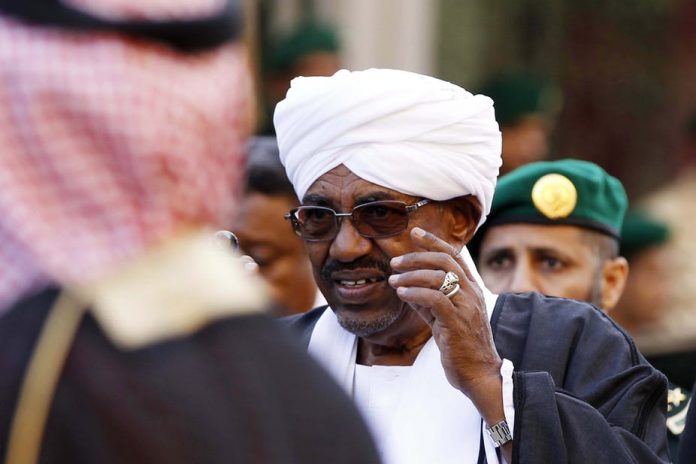
Sudan’s Omar al-Bashir has resigned after three decades in power. AHMED YOSRI/EPA Andrew Edward Tchie, University of Essex

Following months of protests, and a prolonged sit-in outside the military headquarters in Khartoum, Sudanese president Omar al-Bashir was placed under house arrest on April 11 as the country’s military prepared for a transitional government.

Many have described the Sudanese uprising as a “bread protest” against a rise in inflation. In fact the Sudanese people took to the streets for much more than a struggling economy, or the price of bread. They have been calling for freedom, peace, justice and the downfall of the regime.

And they have finally won.

The generation leading the uprising was born and raised during al-Bashir’s 30-year rule. The protesters are mostly young professionals who have been directly affected by the regime’s Islamisation and Arabisation policies.

These policies have been particularly harsh against women’s freedoms and rights, which explains why young Sudanese women are at the heart of the uprising. The policies have also resulted in multiple years of conflict and insecurity in Darfur, South Kordofan, and the Blue Nile.

Sudan’s governing system has already deteriorated because of years of state autocracy, nepotism, corruption and violent conflict.

Al-Bashir’s removal may bring down the state if a strong successor isn’t positioned to replace him. But in my view, given how Sudan has historically been run, the democratic preferences of many young protesters is unlikely to come to fruition. Their expectations for a functioning democracy, with free and fair elections, and constitutional freedoms will not be met unless the next leader of Sudan is a reformist.

Al-Bashir’s first responses

The regime responded to the protests in three ways.

First, al-Bashir tried to quickly reconsolidate his power by proposing constitutional changes that would have allowed him to stand for reelection in 2020. That was quickly taken off the table.

He then declared a year-long nationwide state of emergency. The emergency state prohibited “unauthorised” gatherings and movements. Violence followed as the state deployed heavy-handed tactics to break up the protests.

Al-Bashir also dissolved federal and state governments, replacing almost all of Sudan’s 18 state governors with army officers. And he ordered parliament to delay deliberations over proposed constitutional amendments that would allow him to run for an extra-constitutional term in next year’s elections.

When the protests didn’t subside he called for broad-based dialogue.

In a bid to stay in power, al-Bashir also reached out to those who had backed him financially on previous occasions. These included the Persian Gulf states as well as Egypt and Russia. However, these allies have done little more than offer him vague statements of support.


Read more: How foreign backing is keeping Sudan’s Omar al-Bashir in power


He also began to lose the support of Western backers. Once warm to al-Bashir, they recently began to issue stern reprimands.

The protests

By the time al-Bashir stepped down protests had taken hold in more than 35 cities across the country. People took to the streets in more and more places following the first demonstration in the northern Nile-side town of Atbara.

The current uprising was triggered by a government decision to lift subsidies on essential commodities and to drastically increase bread prices. In a matter of weeks, the protest in Atbara would reach the capital Khartoum 349 kilometres away.

As protests erupted across the country agents of the powerful National Intelligence and Security Service and riot police began to crack down on demonstrators. Throughout, however, the army refrained from intervening. Rumours began to surface that al-Bashir was ready to hand over power to the armed force. But this was swiftly rejected by the Minister of Information and government spokesman of the government, Hassan Ismail.

In the final days before al-Bashir stepped down thousands of demonstrators reached the ministry compound in Khartoum. This also houses al-Bashir’s residence, the secret service headquarters and the defence ministry.

Protesters then upped the stakes by trying to gain support from the army. What began to emerge was that senior officers were possibly weakening, or that they were hoping to use the protests to pressure factions within the ruling elite.

Protesters used a number of tactics to keep the momentum going. These included using social media such as Facebook, Twitter and WhatsApp. All evolved during the uprising despite the government’s attempts to block the user, and Virtual Private Networks were used to access the women’s only Facebook group called “Minbar Chat”.

Videos recorded by the protesters became important in documenting the crimes perpetrated by the security forces during the peaceful protests. They also became the main means of informing the Sudanese people and the international community about the brutality of al-Bashir’s regime.

Now that al-Bashir has resigned he will probably be required to leave the country by agreeing to safe passage to a friendly state, possibly somewhere like Egypt, or Qatar. The only way he can remain in Sudan is if he had prior agreement with the military to ensure his safety. It’s possible that the new generals he appointed after the declaration of a state of emergency might side with him.

Their support could have been one of the reasons why he felt that he could step down. Looking ahead, with or without Bashir, there’s also a possibility that the protests could continue if the people of Sudan feel that the swamp has not been drained of all the regime’s oppressive leaders.The Conversation

Andrew Edward Tchie, Editor, Armed Conflict Database; Research Fellow, Conflict, Security and Development at International Institute for Strategic Studies, University of Essex

This article is republished from The Conversation under a Creative Commons license. Read the original article.

Woman charged for stealing property worth Sh. 330,000

BY PRUDENCE WANZA – A woman has been arraigned in court for stealing property worth Sh. 330,000 from one Ayub Munene. 
She also faces a second charge of being found in possession of two national ID cards no. 34242400 and 28527835 which she allegedly stole.

The accused, Joyce Njoki Kang’ethe, denied the charges before Chief Magistrate, Martha Mutuku at the Milimani Law Courts. 
However, it is suspected that she used the stolen IDs to transfer the money from the bank and mpesa accounts of the complainant.She faces similar charges at the Kiambu Courts but despite that she was granted bail. 
She will be released upon payment of a bond of Sh. 200,000 and an alternative cash bail of Sh. 100,000.
The case has been set for a hearing on 10th May, 2019 and a mention on 25th April, 2019.

How far should Australia go for Julian Assange?

Is Julian Assange getting all he’s owed from the Australian government? EPA/Facundo Arrizabalaga Natalie Klein, Macquarie University

The drama surrounding Julian Assange continues to grow following Ecuador’s decision to grant him asylum.

He faces the threat of being seized in a raid by British authorities on the Ecuadorian Embassy in London, or the moment he steps out the Embassy door. The United Kingdom is compelled to act to fulfil its obligations to Sweden and extradite Assange to face possible charges of sexual assault. Assange doesn’t want to go to Sweden as he fears that he will be taken from there to the United States because of his involvement in the release of classified documents on Wikileaks. Ecuador, Britain, Sweden, the United States – all have an interest, and all have legal rights and obligations, in the treatment of Assange. And this all arises irrespective of the fact that he is an Australian national.

The international jostling around Assange may well raise questions as to the relevance of nationality in a globalised world. Instead, the fact that different countries have legal rights and obligations in relation to Assange has underlined the importance of territorial boundaries and state sovereignty.

Ecuador is insisting on the inviolability of its embassy, as its sovereign representation within the United Kingdom. Sweden is concerned with the prosecution of offences allegedly committed on its soil. The United Kingdom is seeking to adhere to its international obligations when an alleged offender is found within its territory. The United States is concerned about the potential violation of its laws with the release of government documents onto Wikileaks.

Nationality remains important in some respects, but there is a limit to what actions Australia can take because Australian nationality doesn’t mean we can disregard the laws of another country when travelling overseas. Indeed, the Attorney General Nicola Roxon has stated, “What I like to remind the community though is being an Australian citizen doesn’t give your country legal rights to interfere in other processes.” Her comment highlights a fundamental mismatch between community expectations and the legal reality when it comes to the treatment of nationals abroad.

Australia has a right to take up the claim of its nationals when they are injured or mistreated abroad, but it does not have an obligation to do so.

In Hicks v Ruddock, Justice Tamberlin of the Federal Court indicated that Australia may have a duty to consider taking up the claim of one of its nationals. But having to consider whether to do something is still quite different to being required to do something.

It could even be argued under international law that Australia is not yet entitled to take up any claim on behalf of Julian Assange. This right arises when obligations owed to a national abroad have been breached, and it is not clear what rights Assange has had violated at this point in time.

Even if there had been a violation of rights, then Australia’s right to take up that claim may only be exercised when all national remedies have been exhausted. This requirement anticipates that an individual would pursue his or her rights through a country’s judicial system, providing that country with the opportunity to redress any wrong suffered by the foreign national. Assange did not wait for the final verdict before the British courts, or to pursue his rights further before the European Court of Human Rights.

Both Australia and Assange have some legal rights at present, which are based on consular assistance. Consular rights allow for communications between a national and his or her government. The government can take steps to assist a national detained overseas by, for example, providing advice on gaining legal assistance and serving as a conduit of information to the individual’s family. The Foreign Minister, Senator Bob Carr, has indicated that Assange is receiving the same assistance that any other Australian would receive.

What Australia could do politically is quite a different question from what Australia must do legally to assist a national abroad. These points seem to be conflated when criticisms are directed at the government for perceived inaction. Jennifer Robinson, one of Assange’s legal advisors, clearly understands the difference, and has argued that Australia could do more diplomatically and should seek assurances from the United States about any actions it might take against Assange.

These diplomatic interventions are ultimately what might count the most for an Australian who is detained abroad. They appear to have made a difference for people like the “Bali Boy” and Harry Nicolaides who was convicted of insulting the Thai monarchy and, eventually, David Hicks.

But Assange is not the only national in trouble abroad. Members of the Bali Nine, Andrew Chan and Myuran Sukumaran are now dependent on clemency appeals to the Indonesian President to avoid death sentences for drug trafficking; Jock Palfreeman continues to languish in a Bulgarian prison on a conviction of murder with hooliganism despite glaring issues of due process in his trial.

Australians are constantly finding themselves in trouble overseas and turning to their government for assistance. But there is a limit to what Australia is legally required to do.

Ultimately, the diplomatic negotiations that assist Australian nationals happen outside of the media glare, and it cannot always be clear what steps the government takes or what it is prepared to do – until the details are released on Wikileaks.The Conversation

Natalie Klein, Professor & Dean of Macquarie Law School , Macquarie University

This article is republished from The Conversation under a Creative Commons license. Read the original article.

First Lady Margaret Kenyatta : Kenya has made huge strides in the provision of affordable healthcare

First Lady Margaret Kenyatta today commended the progress being made by the government and its partners to ensure that Kenyans have access to affordable Healthcare services.

She said the reduction and in some cases total removal of fees in public health facilities, the ongoing infrastructural expansion, the government-sponsored National Health Insurance Fund (NHIF), the free maternity cover and other interventions are all aimed at protecting Kenyans especially women, children and vulnerable communities.

The First Lady spoke at a Nairobi hotel when she presided over the launch of the Lancet Global Health Commission  on High Quality Health Systems Report in the Sustainable Development Goals Era. First Lady Margaret Kenyatta is a member of the commission.

She expressed concern over the disparities in the quality of healthcare services offered between public and private facilities and across regions saying the huge differences present a major challenge facing the country’s healthcare system.

The First Lady said there is need to focus attention on quality healthcare that all Kenyans can trust irrespective of the provider and their regions.

“We must begin to pay closer attention to quality care, and build resilient health systems that Kenyan’s can trust and have confidence, irrespective of the facility they visit,” she said.

She said poor health systems pose an impediment to the growing demands and expectations by Kenyans on their health needs.

According to the Lancet report, 52,000 deaths occurred in Kenya in 2016 due to poor quality health systems. Out of these deaths, 32,000 were attributed to lack of access to healthcare while the rest were occasioned by poor quality care.

The First Lady said recommendations by the the Lancet report are bound to accelerate the gains made by Kenya in achieving health related SDG 2030 targets because they emphasize on quality health services as  a “big win” strategy.

“We as a country have taken some steps towards enshrining the principle of patient-centred service in our healthcare systems through the Kenya Quality Models for Health guidelines developed in 2012, alongside the Joint Health Inspection Report both developed by the Ministry of Health,” the First Lady said.

Besides enhanced governance and re-organization of health services, the Lancet report calls for a people-centred modernized curricula for pre-service and in-service training of healthcare providers, system-wide actions and a system that listens and cares more.

The report also calls for a system that is more concerned with excellence and is responsive to the needs of the people it serves.

First Lady Margaret Kenyatta said quality healthcare is a right for every citizen and should not be perceived as a preserve of the rich and privileged Kenyans.

She said the recommendations by the Lancet report however require strategic investment from all health partners.

The First lady said the Lancet proposals resonate well with initiatives under her Beyond Zero Strategic Framework which lay emphasis on wellness and a people-centred approach in healthcare provision.

She congratulated the Lancet global Health Commission team of experts including those from the Harvard Medical School, the World Health Organization, Kenya Medical Research Institute (KEMRI) and the Ministry of Health represented at the two-day conference by Cabinet Secretary Sicily Kariuki.

Others who spoke at the high level event included the chair of the Lancet Global Health Commission of High Quality Health System Prof. Margaret Kruk, WHO representative in Kenya Dr Rudi Eggers, the Chief Executive Officer of the Council of Governors Mrs Jacqueline Mogeni and the Ag. Director General of Health Dr John Wekesa.

Create a free account, or log in.

Gain access to read this content, plus limited free content.

Yes! I would like to receive new content and updates.

Sponsored Ad

Ad 1
Ad 2
Ad 3
Ad 4
Ad 5
Ad 6