Sponsored Ad

Ad 1
Ad 2
Ad 3
Ad 4
Ad 5
Ad 6
32.5 C
Kenya
Sunday, April 26, 2026
Home Blog Page 6082

First Lady Margaret Kenyatta leads State House staff in registering for Huduma Namba

Among the first to register for number after the First Lady were State House Comptroller Kinuthia Mbugua, the Chief of Staff in the First Lady’s Office Constance Gakonyo and Deputy Comptroller George Kariuki.

Others included President Kenyatta’s Private Secretary Jomo Gecaga and Aide-De-Camp Lieutenant Colonel Timothy Stelu Lekolol.

The exercise was conducted at State House, Nairobi by a team of registration clerks from the Ministry of Interior and Coordination of National Government under the supervision of Faith Onyango, the officer-in-charge of the National Integrated Identity Management System (NIIMS) in Nairobi.

President Kenyatta launched the national exercise of issuance of the Huduma Namba last Tuesday at Masii in Machakos County by signing up for his own number and flagging off the registration kits to all the 47 counties.

The NIIMS project seeks to identify all Kenyan residents and registered foreigners through a unique primary identifier using biometric (fingerprints and facials only), demographic and physical details in an exercise that also aims at enhancing national security.

The new Huduma Namba will not invalidate but instead harmonize other national registration processes like the signing up for Identity Cards, National Hospital Insurance Fund (NHIF), National Social Security Fund (NSSF), Birth and Death certificates or the Personal Identification Number (PIN) among others.


Huduma Namba which is also aimed at enhancing the speed and efficiency of service delivery to all residents of Kenya will consolidate the other registration numbers in one digital wallet. The other numbers will become secondary identifiers.

Speaking during the launch of the national exercise, President Kenyatta said NIIMS will not only transform civil registration and data management in the country but also tame corruption and fast-track the implementation of the Big 4 development agenda.

People are taking a huge toll on the plains of the Serengeti-Mara

The Serengeti-Mara ecosystem is home to the famous wildebeest migration. Susan Schmitz/Shutterstock Joseph Ogutu, University of Hohenheim

The 40,000 sq km Serengeti-Mara plain that straddles the border of Kenya and Tanzania is famous for its abundant and diverse wildlife. It is also home to one of the wonders of the world: the Serengeti-Mara wildebeest migration. Each year about two million wildebeest, zebra and gazelles migrate from Tanzania to Kenya’s Maasai Mara in search of food and water.

The Serengeti-Mara is made up of pastoral community lands and 12 major protected areas, including the world famous Maasai Mara national reserve and the Serengeti national park. These make up, what we call, the “core protected area”.

But despite its vast protected areas, the Serengeti-Mara is being threatened.

In our new research we show how activities by people – like farming, erecting fences and settlements – are proliferating around the borders of the core protected areas. This is putting huge pressure on the area’s environment, natural resources and wildlife.

This is the first time that a large team of scientists, from seven countries, pooled together various lines of evidence – like ground vegetation monitoring, aerial surveys of animals and GPS tracked animals – to show the impact of human activity on the Serengeti-Mara. The data covers a period of 40 years.

We found that the activities of people have caused extreme changes to the habitat. It has significantly reduced the amount of grass and, because of farms, settlements and fences, the landscape has become fragmented – this means animals can’t move freely to find resources or mate. Key ecological functions have also changed. There are less man-made or wild fires which means that trees and shrubs are able to take root, soils are damaged – and so the land produces less plants – and the area becomes more sensitive to climate change.

Findings

We used 62 aerial surveys, from 1977 to 2016, to examine changes to wildlife, livestock and settlements around the area. For human population figures, we used data collected by the Kenyan and Tanzanian governments.

We found that, within a 60km radius of the core protected area boundary, there were 26% more people. An increase from 4.6 million to 5.8 million in 13 years. The population growth rate was even higher within a 15km radius.

With more people come more livestock, settlements and fences.

The number of fenced plots has increased by more than 20% since 2010 outside of the core protected area, in the Mara Region of Kenya. We found a high density of bomas (settlements), and the number was rising in parts of the Mara by up to three new bomas per square kilometre per year. There was also a substantial increase in the number of sheep and goats (276.2%) and a slight decrease in the number of cattle (9.4%) in the Narok region in Kenya.

But the livestock don’t just stay on the boundaries of the protected areas. They’re going in. Livestock paths were prevalent and visible up to 5km, often even further, inside. This flags that illegal grazing is happening which reduces the quantity and quality of food available for wildlife.

For instance we found that, from 1977 to 2016, illegal incursions into the Maasai Mara national reserve by cattle increased by 1053% and by sheep and goats by 1174%.

We also found that the numbers of resident wildlife species declined by between 40% and 87%. In addition, 63.5% fewer migratory wildebeest used the reserve.

Another threat is agriculture. Over 34 years the amount of agriculture happening around the border went up by 17%. It now covers 54% of the land around the protected area and has destroyed large natural habitats close by. Coupled with high livestock densities, this has intensified the pressure to graze livestock inside protected areas.

The biggest impact has been on migratory animals – like wildebeest.

Using data gathered from GPS radio-collared wildebeest, we found that they were coming together in dense groups at specific locations inside core protected areas as opposed to ranging widely inside and outside.

This reduces the amount of grass each animal has to eat and, because of over-grazing, weakens the capacity of soil to store nutrients and carbon. This means the land is less productive and it increases the area’s sensitivity to weather changes.

There are also less natural or wild fires which are key to maintaining grasslands. When livestock grazing removes grass, young trees and shrubs take root. This turns grasslands into shrublands or woodlands. Wild grazers, like hartebeest, are then likely to be replaced by animals that eat leaves and twigs, like giraffes.

The most troubling changes have taken place in an area called Narok County, located in southwestern Kenya. This area of about 17,933 sq km includes the protected Masai Mara Reserve, wildlife conservancies and community land.

Wildlife numbers here have dramatically declined. This is a big worry because the Maasai Mara is where migratory wildlife go to eat and drink water in the dry season. In its protected areas, over about 40 years, the number of cattle (40%), sheep and goats (189.6%) all increased and virtually all the large wildlife species such as giraffe, eland and topi decreased by between 54% and 93%. The number of migratory wildebeest declined by about 80% and zebra by 75%.

The impact

These intense and extensive changes mean that the Serengeti-Mara area’s wildlife has an unsure future.

The findings call for an immediate and robust response to save the future of the region’s wildlife populations, their habitats and the tourism revenue they bring from imminent jeopardy.

The migration and dispersal corridors along the edges of the Serengeti-Mara should be better protected. Livestock numbers, fences, charcoal trade, cultivation and settlements should be regulated. And illegal livestock grazing and poaching must be controlled in protected areas. Also, conservation benefits should be fairly distributed to communities living around the Serengeti-Mara.The Conversation

Joseph Ogutu, Senior Statistician, University of Hohenheim

This article is republished from The Conversation under a Creative Commons license. Read the original article.


Why the DRC’s army and police aren’t yet ready to protect citizens

Riot police on the outskirts of Kinshasa, Democratic Republic of Congo. EPA/Nic Bothma Thomas Mandrup, Stellenbosch University

The Democratic Republic of Congo is trying to find its footing after a contentious presidential election in December 2018. These elections were preceded by months of political upheaval and poll delays. President Felix Tshisekedi is now in the driver’s seat of Africa’s second largest country, which is home to nearly 86 million people.

Among the legacies he’s inherited is a weak, incoherent and to some extent dysfunctional army, and generally beleaguered security forces. This is an issue that must be urgently addressed – especially because the United Nations’ Stabilisation Mission in the DRC wants to reduce its presence in the country. This is partly in response to budget cuts for peace missions in general.

Plans for a reduced UN mission presence include increasing transfer of security roles to the DRC government. But, as things stand, the mission’s troops are the main source of protection for ordinary Congolese who must navigate between armed groups and oppressive and exploitative government forces every day.

As my research has shown, the country’s own security forces just don’t appear ready to step into the gap. There have been significant improvements in terms of operational capacity, but the police, army and other security forces are still widely perceived as unprofessional.

There is an urgent need to improve the training of both the army and the police, and to secure the needed equipment for forces to undertake operations and for logistical support. These are urgent and long overdue issues that need to be addressed.

Systemic issues

Congo’s security sector reform programme was initiated in 2003. Fairly or unfairly, the programme has been judged a failure. This is because it hasn’t yet integrated and transformed the non-state armed actors into well functioning national security institutions which operate professionally.

But there have been some successes, which aren’t often highlighted. Both the police and the army have been able to extend their presence in the country, and have deployed to most areas of the DRC. However, there is a distinction between being physically present and then being in control. My research shows that often the police and the army operate in collusion with the non-state armed actors, and the relationship is more symbiotic than antagonistic.

My research shows that the army has pockets of well-functioning units. With donor support, it has managed to establish a network of military schools and colleges. It has also implemented a biometric payment system which has significantly improved salary payment to the soldiers. But corruption and misuse of funds is still a challenge – soldiers only get a portion of their pay via this system.

There have also been some policing successes. The legal frameworks for the police and army have been passed by parliament. There’s now a national database of police officers. Training programmes have been launched with the support of international donors.

Still, there are undeniably problems. There are individuals and entire units in the army suspected of war crimes. And corruption and illegal activities are still rampant. The soldiers still need to undertake offensive operations, without having the necessary equipment or even, at times, ammunition.

The police are in many ways in a more dire state. Since the force does not receive the same attention or funding from the government as the army does, it has largely failed to fulfil its functions of providing hands-on security to ordinary Congolese. Corruption, illegal activities and direct taxation – such as bribes payed by traders and motorists – of the people they’re meant to protect are the order of the day in large parts of the country.

Local ownership

A range of factors can help to explain the success or failure of any security sector’s reform programme. Apart from prioritising legal and practical frameworks, the programme should have firm civilian oversight. Local ownership should also be a top priority. Local ownership means that the host government take on a leadership role and is the key institution in defining the needs and priorities of a SSR programme. But this is for many reasons tough to achieve, and has only happened to a limited degree in the DRC.

Donors, too, can make or break reform programmes. This is mainly through a focus on their national political agenda and self-interest, bad programming and the imposition of ‘off-the-shelf’ initiatives on the country in question. My research illustrates that donor staff tend to use standardised tools while SSR programmes needs to be tailored to the local needs.

This can result in ill-conceived equipment donations and maintenance contracts, or training programmes that are unfit for the recipient country’s needs. The DRC is a classic example of this.

Local security realities

Security reform programmes should take note of the local security realities. In the DRC compromises have often been made that have had a negative effect in the medium to longer term. This was for instance seen in the fast-tracking of integration of rebel forces. These units were generally not loyal to the government, but to their former commanders. Another example was the appointment of insurgent leaders to high-level statutory roles for which they had no formal qualifications.

In the DRC priority was given to the need for stability and reducing risk, rather than to long term reforms of the security sector. This is partly why the country’s security forces just aren’t up to the task of properly protecting citizens.

President Tshisekedi has a big task in-front of him. He is taking over a country still divided and in conflict with itself. Many ordinary Congolese are daily faced with the reality of armed non-state actors. On the other hand, are unprofessional national police and army in many ways operating like the armed groups. The DRC government needs to get the security reform programme back on track, and take real ownership of the process.The Conversation

Thomas Mandrup, Associate Professor, Security Institute for Governance and Leadership In Africa (SIGLA), Stellenbosch University

This article is republished from The Conversation under a Creative Commons license. Read the original article.

President Kenyatta witnesses swearing-in of Tourism CAS Joseph Boinnet

Immediate former Inspector General of Police Joseph Boinnet, took the oath of office as Chief Administrative Secretary (CAS) for Tourism and Wildlife at a ceremony witnessed by President Uhuru Kenyatta at State House, Nairobi.
At the ceremony conducted by Head of Public Service Joseph Kinyua and attended by Deputy President William Ruto, Interior Cabinet Secretary Fred Matiang’i and Tourism CS Najib Balala among other senior government officials, Mr. Boinnet signed the Leadership and Integrity Code and the Accountability Pledge.
President Kenyatta also witnessed the signing of the Leadership and Integrity Code and the Accountability Pledge by incoming Inspector General of Police Hillary Nzioki Mutyambai who had earlier taken the Oath of Office at the Supreme Court.
The signing of the Leadership and Integrity Code and the Accountability Pledge by state officers is part of the Head of State’s unwavering commitment to entrenching ethos of good governance and integrity at the highest levels of public service. It is also in line with the President’s stand on absolute fidelity to the principles of transparency and accountability.
Congratulating Mr. Boinnet and Mr Mutyambai on their appointment as CAS and Inspector General of Police (IGP) respectively, President Kenyatta said he looked forward to working with them in delivering quality services to Kenyans.
“I am looking forward to working together with you in our mission to deliver services to the people of Kenya,” President Kenyatta said.
President Kenyatta thanked outgoing IGP Boinnet, saying he served his term with diligence and took the National Police Service to a higher level.
“Your commitment to duty made the National Police Service what it is today. I hope you will take that experience to the Ministry of Tourism as well and move it to a new level in our conservation efforts,” President Kenyatta told Mr. Boinnet.
President Kenyatta also commended incoming IG Mutyambai, saying he expects him to use his wide experience and exposure in the security sector to continue the work of ensuring that the lives of Kenyans and their properties are protected.
“No nation can achieve economic and political stability without security. I look forward to working with you to ensure we achieve our social and economic objectives for the people of our nation,” President Kenyatta said.
The Head of State urged the new IGP to work closely with his colleagues and members of the National Police Service Commission in order to deliver on the mandate of the service and in line with its motto of “Utumishi kwa Wote”.
At another function at State House, Nairobi, President Kenyatta received credentials from the incoming Chinese Ambassador to Kenya Wu Peng. Ambassador Wu is also the Permanent Representative of China to the UNEP and the UN-Habitat.

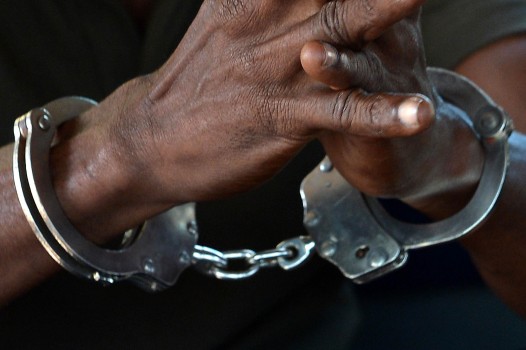
Fake police officer arraigned in court for arresting a hawker

BY PRUDENCE WANZA – A man has been arraigned in court for impersonating a police officer. One Samuel had initially arrested a hawker at Globe Cinema Rundabout, frequented by hawkers in Nairobi.

He was also charged with possession of handcuffs belonging to a police officer. The accused, Samuel appeared before Chief Magistrate Francis Andayi at the Milimani Law Courts and pleaded not guilty to the charges.

He will be released on a bond of Ksh. 100,000.Hearing set on 13th May, 2019.

3 people charged for defrauding a Ukrainian 100Million shillings

BY PRUDENCE WANZA – Three people have been charged at the Milimani Law Court  of obtaining Ksh. 100m falsely.

The particulars are that, on diverse dates between the month of January 2018 and October 2018 at the offices of M\S Afrosolutions Company along Kaptei Road Kileleshwa in Nairobi county jointly with others not before court with intend to defraud obtained US dollars 1.05M equivalent to Ksh. 100M from Mr. Kavalenko Henneddii, a Ukrainian National by pretending to sell him gold.

The three, Consolata Achieng, Washington Libese and Enock Mungwana appeared before Chief Magistrate, Francis Andayi and pleaded not guilty to the charges. 
They will be released upon payment of a bond of Ksh.2m and an alternative cash bail of Ksh. 1m. 

From right: Consolata Achieng, Washington Libese and Enock Mungwana appeared before Chief Magistrate, Francis Andayi and pleaded not guilty to the charges | PRUDENCE WANZA


The case will be heard on 15th May, 2019 and will be mentioned on 23rd April, 2019.

Man arraigned in court for fake Range Rover deal

BY PRUDENCE WANZA – A man has been arraigned in court for obtaining Ksh. 3,213,000 from one James Ochieng Onyango by falsely pretending to sell him motor vehicle of make Range Rover with registration no. KBU 220U. 
The accused, Emmanuel Mulobi Musebe, pleaded not guilty to the charges before the Chief Magistrate, Francis Andayi at the Milimani Law Courts. 


He will be released on a bond of Ksh. 1M and an alternative cash bail of Ksh. 500,000.
The hearing of the case is set to be 13th May, 2019 and the mention on 23rd April, 2019.

Light pollution: the dark side of keeping the lights on

Bernard Coetzee, University of the Witwatersrand

Twenty five years ago Los Angeles experienced a massive power blackout due to an earthquake. The entire city was thrust into darkness. The emergency call service, 911, was inundated with panicked residents reporting “a giant silvery cloud”, was engulfing the sky. Unknown to the callers, they were seeing the Milky Way, the galaxy containing our Solar System, in the night sky for the first time. Some of these urbanites had never before experienced a non-light polluted sky.

Light pollution is the excessive and obtrusive light produced by humans at night. This light is from artificial sources, mainly electricity from houses, offices, streetlamps, billboards or car headlights. There are two main types of light pollution: point source, that is light directly from a source, and skyglow, the combined and accumulated effect of point source lighting that spreads through the atmosphere. This is the slight glow one can see on the horizon if looking towards a city from a rural area.

Almost a quarter of global land area is now under light polluted skies. And 80% of the world’s population now lives under such light polluted skies, meaning a third of humanity can no longer see the Milky Way.

The introduction of artificial light at night has occurred in a universe, that is, in fact, exceedingly dark. Apart from the soft glow of celestial light, it is remiss of us to forget that half the earth always used to be, at any moment in time, in utter darkness. We only experience sunlight daily because of the random virtue of happening to be close to a star. That means that over evolutionary timescales, life on earth, and humans also, have adapted to constant and regular day-night cycles.

Many species use these sunlight cycles, and moonlight cycles, to time their behaviour, activity and sleep patterns as well as when to mate and when to feed. But now, the spatial coverage of light pollution is large, and its intensity is increasing.

But there’s a bigger problem: there’s mounting evidence that increased lighting has a range of negative effects.

Lighting’s bad side

Lighting negatively affects the environment as it disrupts the natural light cycles that species are cued into. These include changes in time partitioning such as singing, activity and foraging in animals, or altering individual health.

And there’s increasing evidence that lighting has negative effects on human health. Melatonin is the hormone that regulates human sleep patterns and is expressed under light. Changes in light regimes away from day-night cycles caused by light pollution means that it can disrupt this vital hormone’s natural expression. This has been linked to obesity, reduced sleep quality and impaired memory.

Because melatonin is an anti-oxidant that can remove free radicals, the disruption of its expression by artificial light may increase cancer risk. Disruption of natural light cycles is particularly acute with newer LED (Light Emitting Diode) lights, which are increasingly being adopted globally for their energy efficiency benefits. Yet, there’s little consideration of their negative health consequences.

Managing the problem

A recent review in Science has outlined five key strategies to reduce lighting globally, which will not necessarily compromise its benefits. They are:

  • The introduction of light to previously dark areas should be avoided.

  • Lighting should be at the lowest usable intensity.

  • Lighting should only be used where it’s directly needed and shielded where possible.

  • Lighting should only be used when required.

  • Lighting should be “warmer”, meaning more orange colours should be used rather than in the harsh white spectrum.

African research required

Given the extent and severity consequences, the dearth of light pollution research in Africa is a surprising oversight. Africa still remains one of the least light polluted continents, but this is rapidly changing with the expansion of lighting infrastructure, which it is closely tied with economic development. This is especially true for rural areas that may increasingly gain access to electrical grids and LED lights.

The recent global atlas of artificial skyglow did not make any ground-based measurements in Africa (nor South America or most of Asia), and serves as an example of how desperately a more robust and widespread understanding is required of its impacts.

Light pollution is a pernicious and increasingly understood global change driver. While many Africans may still see the Milky Way, the expansion of lighting infrastructure is imminent. As with other global change drivers, the continent is at an important juncture to ensure that its economic trajectory does not compromise its human and environmental health. How best to do so for light pollution still remains to be decided.The Conversation

Bernard Coetzee, Conservation scientist, University of the Witwatersrand

This article is republished from The Conversation under a Creative Commons license. Read the original article.

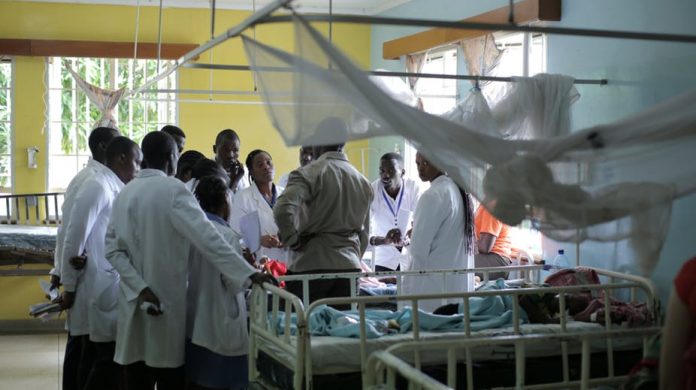
Scorecards can help measure health outcomes. An East Africa case study

Doctors at a hospital in Kisumu, Kenya. Shutterstock Wilfred Senyoni, University of Oslo

Information is important for high level managers to make informed decisions. The advance of information and communication technology means that information is generated in abundance and at a fast pace. But this has led to managers facing information overload. This is particularly true in the health domain – a sector fragmented with information systems from a variety of data sources.

One way round the problem is to visually present the information from different sources on a single screen. This can enable data managers to monitor a comprehensive set of performance indicators at a glance and make informed decision.

A tool that enables this is the scorecard, or dashboard, which gives a full view of an organisation’s performance by using a “traffic light” visualisation to link short and long term goals. This concept was introduced by Robert Kaplan and David Norton in 1996 and has since been used by managers in various sectors.

I conducted a study over four years to understand how scorecards could be used in the East Africa Community to strengthen regional collaboration and address common health agendas. During the study a regional scorecard was developed, made up of indicators measuring health performance of partner states based on set targets.

The scorecard

The developed scorecard was used in the six partner states that make up the East African Community. These are Burundi, Kenya, Rwanda, South Sudan, Tanzania and Uganda.

The research was part of the larger global Health Information System Program. The initiative has been ongoing for the last 20 years and involves software development and country implementation of District Health Information Software in several countries in Africa, Asia, South America and Europe. I am part of the global network and have been engaged in implementing and evaluating health information systems in several of these projects in Africa.

The East African Community scorecard was first used to monitor maternal and child health care.

A set of indicators measuring countries’ maternal and child health care performance were selected in the design of the regional scorecard. Data populating the selected indicators were periodically pulled from the national level health information system.

For example, one indicator included in the scorecard measured the percentage of women who visit health facilities at least four times during pregnancy. This indicator was based on World Health Organisation (WHO) recommendations which have since been increased to eight visits.

The scorecard was designed and developed by regional and national health information systems experts as well as officials responsible for maternal and child health policies in the partner states’ ministries of health. The development process entails a series of face to face meetings complimented with off-site discussions. Members from health information initiatives were also part of the implementation process.

The regional scorecard measured the countries’ performance by displaying a red colour where performance was off track, a yellow colour for progress but requiring more effort, and the green colour indicating the target achieved.

The first regional scorecard was launched on 2015 in the East African Community. The event brought together ministers in the region responsible for health, selected parliamentarians, the academia and development partners.

Using a colour coded approach, the scorecard managed to capture the attention of leaders from the region by quickly identifying the indicators with poor performance as well as those that needed more drive to achieve agreed targets.

By arranging the countries together while showing their performance, the scorecard generated a competition element among leaders. For example, while progress was observed from Rwanda and Tanzania in reducing child mortality, progress towards maternal health goals was slow across the rest of the region.

This awareness prompted ministers of health and parliamentarians to commit resources to areas with lower performance.

In addition, the leaders of the East African Community endorsed the first regional scorecard, and asked for it to be produced annually.

Lessons learnt

A few useful lessons were learnt from the research. It showed that the scorecard was:

  • An effective communication tool. By using the traffic light display, managers could track performance of several indicators. Its visualisation enabled information to be understood at a glance.

  • Useful as the basis for performance benchmarking: understanding areas that affect the success or failure of the organisation is of a paramount importance in the management of complex system like health sector.

  • A good advocacy tool. It can be used in discussions among technical and non-technical stakeholders in viewing the progress and address challenges.

Way forward

Based on the experience in East Africa Community we believe the scorecard can be useful in creating awareness among high level managers and engaging them in a broader discussion on improving the maternal and child health care. Managers can rely on the scorecard to quickly inform them of the performance of their organisation as well as what progress is being made towards a defined set of targets.

We are working on a third version of the scorecard for the East Africa community to be integrated into other health programmes such as HIV and TB.The Conversation

Wilfred Senyoni, PhD Candidate in Information Systems, University of Oslo

This article is republished from The Conversation under a Creative Commons license. Read the original article.

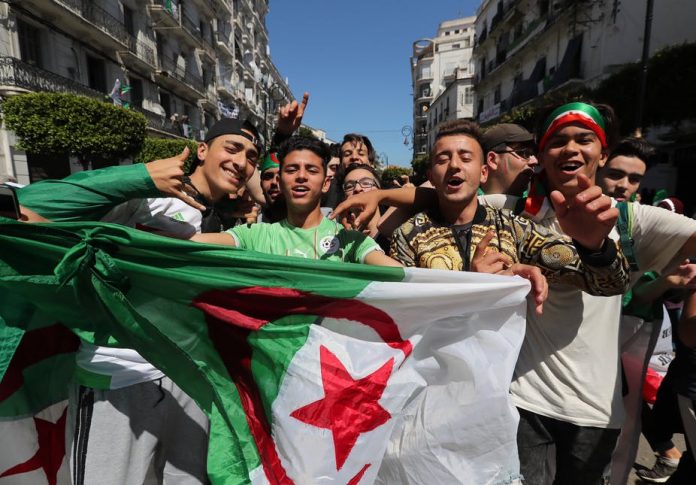
Bouteflika steps aside as Algerians push to reclaim and own their history

Dounia Mahlouly, SOAS, University of London

Algeria’s long-time leader Abdelaziz Bouteflika has agreed to step down following a series of mass protests against his original plan to bid for a fifth term.

After weeks of uncertainty, the country’s military chief Ahmed Gaed Salah declared the 82-year-old leader constitutionally unfit to rule. An interim leadership will be formed under the supervision of the army. Everything seems to suggest that the country is heading towards elections and a constitutional referendum.

Some observers have drawn parallels between events in Algeria and the “Arab Spring”. These mass demonstrations against corruption and acts of police brutality which swept through North Africa from 2011. The pro-democracy uprisings led to the overthrow of three authoritarian regimes: Tunisia’s Ben Ali, Libya’s Muammar Gaddafi and Egypt’s Hosni Mubarak.

Political pundits and analysts drawing these comparisons may be tempted to speculate about hidden agendas, or deplore the lack of a common ideological framework for the opposition. This is because, in countries where opposition forces failed to cohere in a meaningful way, the 2011 revolutionary momentum was easily hijacked by counter-revolutionaries.

But these debates miss the point. They overlook the social and cultural value of the Algerian protests. They also reveal that the international community has remained centred on the question of political stability since the civil war of 1991-2002. In fact, the singular achievement of these demonstrations is that Algerians have reclaimed ownership of their past.

This is apparent in the way that protesters invoked the memory of the war of independence. It could also be seen in their allusions to slogans or songs from that time, calling for “Algeria’s liberation”.

The memory of Algeria’s liberation was politically hijacked by the elites who’ve held power since the 1954-1962 Algerian war of independence.

The Oujda Group

During the independence war against France, the National Liberation Army placed Bouteflika in charge of the western border, close to the Moroccan city of Oujda. He became part of the Oujda group led by Houari Boumédiène. It was Boumédiène who helped Ahmed Ben Bella unseat the first post-independence provisional government in 1962.

Boumédiène then became defence minister, and had much influence over the government through the army. Bouteflika became foreign minister. Following political tensions at the top Boumédiène overthrew Ben Bella in a 1965 military coup.

Under the military-led National Liberation Front, Algeria was a one party state until the 1989 constitution introduced a multiparty system. Bouteflika became a member of the Front’s central committee when serving as a foreign minister. With the help of interior minister and the head of intelligence, he took office in 1999.

Bouteflika was initially able to gain popularity by acting as if he intended to break with his predecessors’ anti-colonial and pan-Arab traditions. He capitalised on the imperative of national security to build legitimacy in the aftermath of the civil war. Algeria remained under a state of emergency for almost 10 years after the end of the civil war. This was known as Algeria’s “black decade”.

Beyond the country’s borders, Bouteflika proved popular. The international community was particularly receptive to this narrative in the context of the post-9/11 “war on terror”.

Under Bouteflika

Under Bouteflika, the penal code was amended to impose punishments for any “insulting or defamatory” statement likely to harm the president. This law saw independent journalists and human rights advocates repressed in the name of national security.

During the same period, a law was promulgated which granted amnesty to terrorists guilty of committing crimes during the civil war. Implicitly, this new law exonerated members of the Algerian secret services. Many of them had served with the Armed Islamic Group. This was one of the two main Islamist insurgent groups that fought the Algerian government and army in the Algerian civil war.

Historically, the power elite – made up of the military, the secret services and the Political Bureau of the National Liberation Front – built its legitimacy on a distorted memory of the war of independence. This arguably added to Algeria’s post-colonial identity crisis and the climate of polarisation that laid the ground for civil war.

Bouteflika later capitalised on the trauma of the “black decade”, while depriving Algerians of the economic and social resources they needed to cope with the growing challenges regarding migration, climate, water scarcity and security. Ironically, this is partly the reason why the question of political stability still prevails today.

Looking ahead

This history demonstrates why the debate around today’s political crisis often misses the mark and ignores the real issues. It’s important to fully appreciate what it means for Algerians to reclaim ownership of their history with confidence – and to consider a world beyond Bouteflika’s troubled leadership.The Conversation

Dounia Mahlouly, Senior Teaching Fellow, Social & Political Sciences, SOAS, University of London

This article is republished from The Conversation under a Creative Commons license. Read the original article.

Create a free account, or log in.

Gain access to read this content, plus limited free content.

Yes! I would like to receive new content and updates.

Sponsored Ad

Ad 1
Ad 2
Ad 3
Ad 4
Ad 5
Ad 6