BY FAITH MUTETE – Times have changed! African women are taking up different roles in the society. Each day is a new day where we get to experience great and big things done by women of different races all over the world.
Here is a list of the top 4 richest women in Africa
FOLORUNSHO ALAKIJA
Born in July 1951 she is a Nigerian billionaire businesswoman with an estimated net worth of $2.1 billion. She is involved in the fashion industry, oil and printing industries and is the managing director of the rose of Sharon Prints & Promotions Limited.
She is also listed as the second most influential women in Africa after Ngozi Okonjo and the eighty seventh most powerful women in the world by Forbes. As for her personal life, she is married to a lawyer and has been blessed with four sons and grandchildren. Folorunsho is also involved in philanthropic activities which involve a foundation called the Rose of Sharon that helps widows and orphans by offering them scholarships. She also sponsors medical and engineering scholarship schemes in Nigeria
ISABEL DOS SANTOS
The 46-year-old is the daughter of the former Angolan president Jose Eduardo Dos Santos is nicknamed the princess of Angola. She was the head of Sonangol Angola’s state oil firm and during that time she managed to end up with stakes in Angolan companies including banks and a telecom firm. She now owns shares of Portuguese companies including telecom and cable TV firm Nos SGPS.
Isabel has an estimated net worth of $2 billion and besides Unitel her business interest includes media, retail, finance and energy.
MAMA NGINA KENYATTA
She is the widow of the Kenya’s first president, Mzee
Jomo Kenyatta and the first lady Kenya has
had and though now not in the lime light she has been able to attain undeniable
wealth over the years. Her family has investments in hospitality, real estate banking,
education, banking, and manufacturing.
Mama Ngina oversees several brands including the largest privately-owned bank the Commercial Bank of Africa’s, the upmarket hotel chain Heritage, not forgetting Brookside Diaries, Media Max and Timsales Timber.
As of 2013, Ngina Kenyatta’s Networth was $1 Billion
Despite her wealth and power Mama Ngina has also been able to be an effective mother and incredible wife to the former president who is a woman of few words and rare in the public eyes but when she shows up you cannot fail but notice her incredible sense of style.
WENDY ACKERMAN
She is a south African self-made wealthy power house
who started out as a teacher in Soweto, where she taught night school but over
the years Wendy and her husband own Ackerman family trust which owns 50%of pick
n pay.
She has deeply been involved in driving change and promoting education in south Africa particularly in providing access to education to the needy and underprivileged in the society. She is a trustee of Ackerman Family Educational Trust which assists students in South Africa with bursaries and PICK N PAY bursary fund which provides education assistance to the employees in the company. Her great work in philanthropy is a great motivation to future female leaders that you can still be rich and bring positive change to the world.
BY FAITH MUTETE – Ten years ago, members of parliament were household names in Kenya. Most Mps were known well beyond their constituencies, districts, regions and even provinces. The likes of Paul Muite, James Orengo, Musikari Kombo, Dr.Eldon Wameyo were well known beyond their provinces. So were Boy Juma, Karisa Maitha, Matu Wamae and Jonesmas Mwanza Kikuyu.
But thanks to devolution that has changed the focus to Governors, MPs have since stopped becoming house hold names. Also, the fact that MPs are no longer appointed to the cabinet, has heavily reduced their countrywide recognition.
But their stature remains the same in Parliament and at home where they enjoy good public appeals courtesy of CDF. Today, few Kenyans outside Bungoma know the Mp for Webuye….or the Mp for Kwale East outside Kwale County..
BY FAITH MUTETE – Kenya Broadcasting Corporation (KBC) Chairman David Were, Managing Director Naim Bilal were led by technical services Manager George Kanyi, inspecting the corporation’s Webuye station. The brand new TV transmitting station. The new site has been funded by the Government of Spain.
Other Stations funded by the Spanish Government are in Kitui, Kilifi, Kwale, Wajir, Maralal, Nyahururu, Bondo, Hola and Lamu. It consists of the first phase of the Government of Kenya and Spain support to upgrade KBC facilities to boost credible information dissemination by the National broadcaster.
The entire Western region to recieve excellent TV signals not only for KBC, but for other channels that procure content from KBC.
The Chairman said the Webuye station will ensure the entire Western region receives excellent TV signals not only for KBC, but for other channels that procure content from KBC. Were said the board will ensure that Kenyans receive accurate, credible and balanced news from the national broadcaster. The total Spanish grant under the phase 1 was Sh.1 Billion.
BY PRUDENCE WANZA – Five suspects of the Barclays banks ATMs theft have charged in court this morning. The five appeared before Senior Principal Magistrate at the Milimani Law Courts.
They include, 1 taxi driver, 2 Police Officers and 2 drivers at G4S security Company. The taxi driver is suspected to have driven other suspects who were not before court at the Barclays ATM at the Mater hospital. He is charged of stealing and conspiring to commit felony of Sh. 1m from the Barclays bank ATM. He denied the charges in court.
The taxi driver, Patrick Nyoike Karanja, is a widower, and on that particular day he was driving a motor vehicle registration no. KCE598L which is currently detained at the DCI headquarters. However his lawyer applied for the vehicle to be released as it is his main source of income.
The taxi driver, Patrick Nyoike Karanja, is a widower, and on that particular day he was driving a motor vehicle which is currently detained at the DCI headquarters. | PRUDENCE WANZA
The 2 Police officers and the drivers from G4S, also face a similar charge of stealing and conspiring to commit a felony of Sh.2.8m from Barclays bank ATM at Kenya Cinema along Moi Avenue. The four;Fredrick Herman Otiya, Daniel Orero Okindo, George Njoroge and John Otieno Makambongo denied the charges.
The 2 Police officers and the drivers from G4S, also face a similar charge of stealing and conspiring to commit a felony | PRUDENCE WANZA
They will all be released on Ksh.2m bond or an alternative cash bail of Ksh. 500,000. The case will be mentioned on 16th May, 2019 for pretrial and the hearing will be on 5th June, 2019.
President Uhuru Kenyatta has sent a message of condolence and encouragement to the family, relatives and friends of Kakamega drama teacher, thespian and community organiser Frandell Njite Esipisu who died after a short illness.
The late Frandell Njite, 43, was brother to Ambassador Manoah Esipisu, Kenya’s High Commissioner to the United Kingdom.
In his message, President Kenyatta said he was deeply saddened by the untimely death of the influential drama teacher who had great passion in nurturing the talents of students in the performing arts.
“It is very sad that we have lost one of our outstanding drama teachers at such a young age. In this hour of sorrow and grief, I convey my deepest sympathies and heartfelt condolences to the family, relatives and friends of the late Frandell Njite Esipisu,” President Kenyatta said.
The late was a regular participant at the national drama and music festivals where he prepared and presented students to perform award winning choral verses, poems and plays often written and directed by himself.
Mr Frandell Esipisu, a former student of Ematetie Primary School, Bungoma High School and Mosoriot Teachers Training College was a gifted thespian and orator who also served as a drama adjudicator and consultant.
He leaves behind a widow Mrs Anne Khaoya Njite and two children, Shantel Sheraton Ambasa and Michelle Mwanika.
President Kenyatta prayed to God to comfort the family at this difficult period of mourning.
A century ago, the Winnipeg General Strike shut down what was then Canada’s third-largest city. Today, the strike is usually remembered as a moment when workers demanded the collective bargaining rights and living wages that are defended by today’s unions.
While we might be tempted to see the strike as an event that belongs strictly to the past, how we understand the past influences how we see the future. And the Winnipeg General Strike is no exception.
More important, what workers did in Winnipeg a century ago may be more relevant to our future than most people think. The Winnipeg General Strike of 1919 provides important lessons of worker solidarity and action that we may need to pay close attention to as workers’ struggles are likely to intensify in Canada.
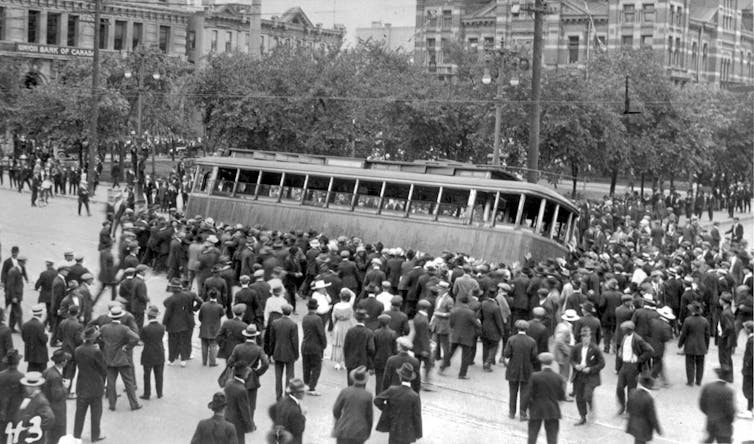
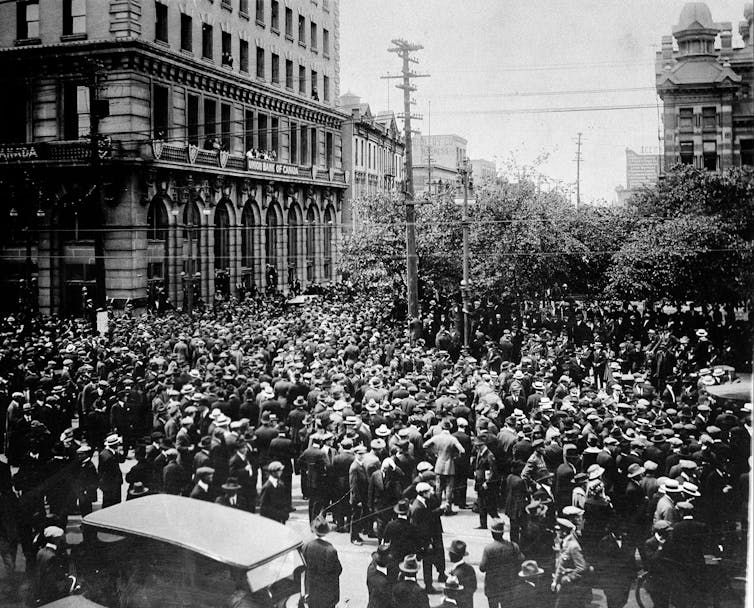
Iconic image of the Winnipeg General Strike from ‘Bloody Saturday.’L.B. Foote/Manitoba Archives
Nothing quite like the General Strike has happened in Canada since 1919. Although the Common Front strikes that shook Québec in 1972 resembled it in some ways, the framework of labour law that’s been in place since the 1940s has restricted workers’ actions.
So the Winnipeg General Strike wasn’t a strike of the kind we’re familiar with today. Most historians tell us that Winnipeg’s construction and manufacturing workers were fighting for basic union rights in the difficult circumstances after the end of the First World War and that their efforts boiled over into a general strike because of the intransigence of employers.
However, this story doesn’t fully capture what happened in Winnipeg.
Historian James Naylor has argued that what happened was “in many ways more of a local (and potentially regional and national) revolt than a strike.”
When union members in 1919 demanded collective bargaining with their employers, what they wanted wasn’t what collective bargaining is today. They would have opposed today’s extremely tight legal restrictions on when, how and for what workers are allowed to strike. The issue of collective bargaining, Naylor says, “was an issue, but as much as anything else, it was the catalyst for a much broader struggle.”
Aspirations for a better city
In remarkable solidarity, the strike brought together union members with non-unionized workers. Workers also infused the strike with aspirations for a better society that they would help create by their own efforts.
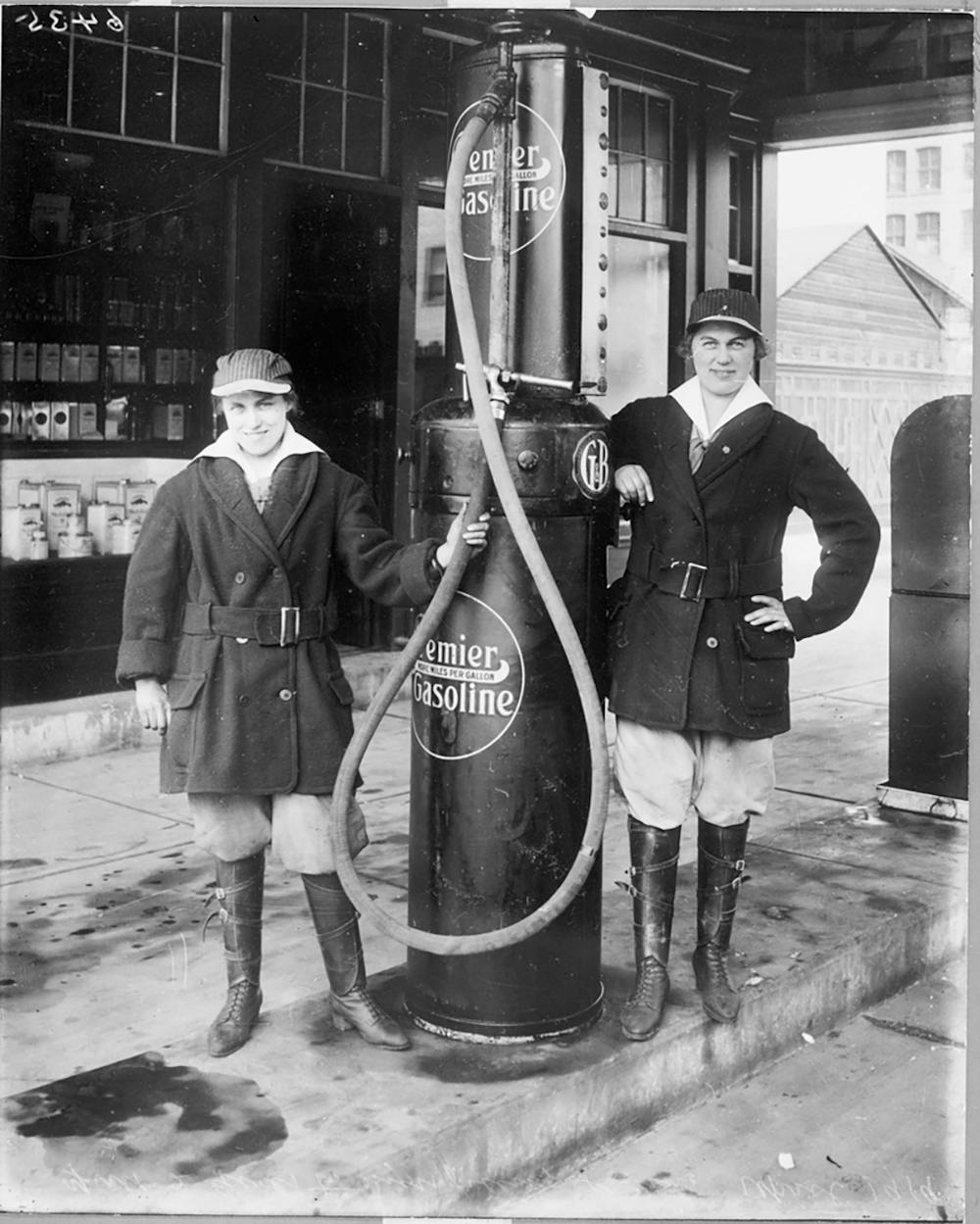
Although hundreds of women participated in a sympathetic strike to support the metal and building trades workers, some were anti-strikers and worked gas stations during the Winnipeg General Strike, May 1919.L.B. Foote/Archives of Manitoba
Workers rejected the domination of their city by capitalists at a time when many people across Canada and around the world were questioning the social order that puts profit before people and had caused the First World War.
The way the struggles of unionized workers in Winnipeg grew into a citywide strike isn’t the only way ordinary people can launch a local revolt.
Could some popular upsurge happen in Canada in the next century? I think this is a real possibility because of the economic and ecological crises we face.
We are currently experiencing what economist Michael Roberts calls a “long depression” — similar in some ways to the economic slump of 1873-97 and the Great Depression that started with the 1929 stock market crash and was only brought to an end by the Second World War.
More recently, the Great Recession of 2008-09 ended the period of global economic expansion that started in the early 1980s. A new wave of investment has still not begun.
It will take deep economic restructuring to reboot global capitalism. These changes will surely bring more severe job losses, work intensification and austerity. When a new period of economic expansion eventually begins, we could see more employers decide to invest in advanced technologies that will make work worse for many workers and eliminate more jobs.
Many earth system scientists are warning that human activity is destabilizing “the only state of the planet that we know for certain can support contemporary human societies.”
The Winnipeg General Strike.CP/National Archives of Canada
A new climate regime will have far-reaching effects on society. It will be expensive for governments to respond to damage caused by more extreme temperatures and precipitation, more severe storms and flooding, and more droughts and wildfires.
There will also be costs connected to the effects of climate change on water supplies, agriculture, urban life and more. These costs will increase the pressure on governments to slash spending on education, health care and other public services.
The combination of economic restructuring and how governments respond to the ecological crisis could create a major social crisis in Canada. In such conditions, a popular revolt would be entirely possible. We may find clues for what it might look like in anti-austerity struggles in Greece, the gilets jaunes movement in France, and teachers’ strikes in the U.S. – all recent experiences where the usually-muted antagonism between the working class and the dominant class has flared into class struggle.
In such a situation, the lessons of the Winnipeg General Strike about the power of far-reaching solidarity and the danger of state repression would be directly relevant.
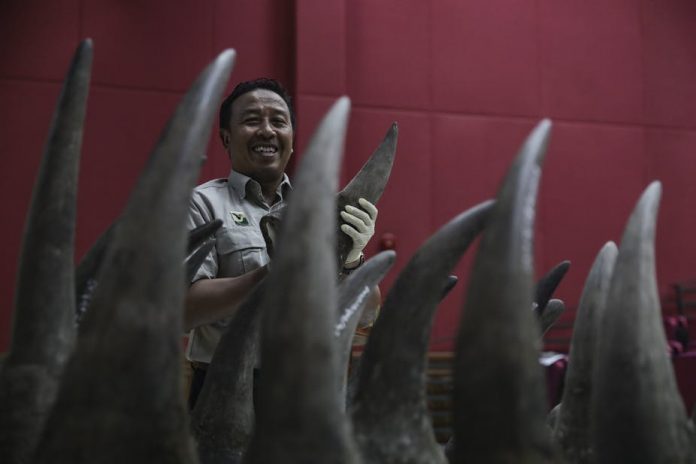
Vietnam is one of the world’s largest consumers of rhino horn, contributing to the continued poaching of rhinos in the wild. Last year in Africa 1,100 rhinos were killed by poachers. And today there are only about 29,500 left in the world.
Considerable efforts have been devoted to reducing the demand for rhino horn in Vietnam. In 2015, the Government of Vietnam increased sanctions on the illegal trade and use of rhino horns. And, through a variety of campaigns, conservation organisations have tried to educate Vietnamese consumers about Africa’s rhino poaching crisis and the uselessness of rhino horn in medications.
We conducted a study to shed light on why people use rhino horn. To do this we interviewed consumers who admitted to using rhino horn in Vietnam.
We found that people used rhino horn for a number of purposes, principally as a medicine and as a status symbol. The most prevalent use was for treating hangovers. Other uses included using it to honour terminally ill relatives.
We also found that consumers preferred wild rhino horn over farmed rhino horn. And that they weren’t affected by stigma or concerns about rhino populations.
Our findings suggest that the demand for rhino horn is unlikely to fall because people’s beliefs are firmly entrenched. Our hope is that our findings help reshape the focus of future conservation campaigns by targeting the prevalent reasons for its use and the values associated with it.
Health and wealth
We interviewed 30, self-confessed, recent users of rhino horn and one rhino horn trader. They came from the upper income bracket of Hanoi, the capital of Vietnam.
The people we interviewed said that they used rhino horn to treat various ailments including hangovers, fever, gout and potentially terminal illnesses, like cancer or stroke. Some people also gave it to terminally ill relatives to console them and show that they had done everything in their power to help them.
Our findings confirm that the idea that rhino horn has magical healing properties is deeply rooted in Vietnam.
Aside from being used as medicine, rhino horn is considered a status symbol. Consumers said that they shared it within social and professional networks to demonstrate their wealth and strengthen business relationships. Gifting whole rhino horns was also used as a way to get favours from those in power.
Stigma
We found that the use of rhino horn doesn’t attract a stigma in Vietnam. The consumers we interviewed said they weren’t concerned about poaching or the plight of rhinos. The killing of rhinos in Africa was seen as a remote issue, something that happened far away, out of their influence because they didn’t kill the rhinos themselves.
They were also not concerned about the legal repercussions of buying it. The penal code of Vietnam prohibits illegal trade and use of rhino horn. However, all interviewed believed that the police would not pay attention to rhino horn use and that law enforcement efforts only focused on illegal trade in large quantities. And they’re not wrong.
And it’s not just the consumers who aren’t worried. A former trader of rhino horn said that potential profits from the trade far outweighed any risks.
Inform campaigns
Our findings shed light on why current campaigns against rhino horn purchases aren’t working. For example, they tend to highlight the plight of rhinos, suggest that rhino horn doesn’t have medicinal properties or emphasise the legal consequences of purchasing it. Some campaigns also compare rhino horn to human nails (because they’re both made of keratin).
From our research it’s clear that people who buy rhino horn won’t be won over by any of these arguments.
In addition, our finding that consumers prefer rhino horn from wild animals has implications for the suggestion made by some observers that a controlled legalised trade could reduce poaching. We conclude that in fact such a trade would simply increase demand for poached rhino horn.
We hope that our insights will lead to campaigns that promote behaviour change. And campaigns that are better informed about the values associated with the use of rhino horn and that target the most prevalent types of uses.
Whether or not the legalisation of trade in rhino horn will be a solution to the poaching crisis is the focus of an ongoing study that we’re doing.
BY PRUDENCE WANZA – Two people have been arraigned in court for allegedly being in possession of approximately 92 passports which they could not give a proper account on how they came to possess them. The two were arrested on 29th April, 2019 at Evergreen Mall along Naivasha road where they were found in possession the passports. The accused persons, appeared before Senior Principal Magistrate, Kennedy Cheruiyot at the Milimani Law Courts where they pleaded not guilty to the charges.
However the prosecution opposed their release on bail or bond and to consider the seriousness of offense citing that each count attracts maximum fine of 5M or custodial sentence of five years or a Jail term of 490 years. Prosecution also added that accused persons may abscond court and interfere with witnesses.
Two people have been arraigned in court for allegedly being in possession of approximately 92 passports | PRUDENCE WANZA
According to their lawyer, Danstan Omar, the prosecution had not given the court an affidavit to oppose bail or bond. He also added that the accused persons are above thirty years and their life expectancy may be below one hundred years and the jail term of 490 years may not be logical. “The witnesses mentioned in the case are not part of the complainants in the case and therefore there are no chances of them interfering with witnesses, ” he said.
The two are said to be business people who help Kenyans in the process of seeking employment abroad. They face 98 counts of being in possession of passports without a proper account on how they possessed them. However according to Cheruiyot, the prosecution gave the punishment of the offences as compelling and that can not amount to denial of bail or bond.
The two will be released on a bond of Ksh. 4.5M and an alternative cash bail of Sh. 450,000. The hearing of the case has been set on 14th June.
BY PRUDENCE WANZA – An MCA was arraigned in court today, charged of raping a 16 year old girl in Nyamarambe, Gucha South Sub-County.
The accused, Evans Omwansu Mokoro -Moticho ward MCA was brought before Senior Principal Magistrate Denis Mikoyan where he was also charged with the offence. Evans was also charged of committing an indecent act with a child during the same period.
He was released on a cash bail of Ksh. 50,000 or Ksh. 200,000 bond after pleading not guilty to the two charges.
Evans will be expected back to court on May 16, 2019
BY PRUDENCE WANZA – Former Nairobi governor Evans Kidero was today at midday charged in court at the Milimani Law Courts. He was arraigned with 15 others to take plea before Chief Magistrate Douglas Ogoti.
Dr Kidero, who spent the weekend in custody, faces charges alongside other suspects among them; John Ndirangu Kariuki(former Nairobi Mayor), Paul Mutunga Mutungi(former Councillor) and George Wainaina Njogu(former Chief of staff)
They face charges relating to abuse of office, money laundering, conspiracy to commit offense of corruption and unlawful acquisition of public property.
He will be facing charges relating to irregular payment of Sh68 million to the firm of Wachira Mburu, Mwangi and Company Advocates.
The former governor and his co-accused denied the charges and requested to be released on bond.
They will be remanded at Kilimani Police Station awaiting ruling on bail application tomorrow.