Sponsored Ad

Ad 1
Ad 2
Ad 3
Ad 4
Ad 5
Ad 6
22.4 C
Kenya
Friday, June 12, 2026
Home Blog Page 6279

The Genesis of DP Ruto, Gideon Moi war laid bare

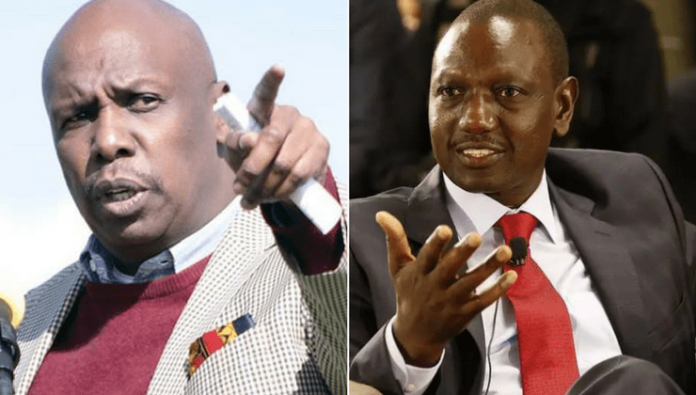
BY FAITH MUTETE – The political cold war between Deputy President William Ruto and Baringo Senator Gideon Moi played out in the open during the burial of Jonathan Moi at Kabimoi.
The fight appears to have roped in retired President Moi whose handlers ensured that there was no eye contact between the DP and the retired President

Why then is the animosity?
Let’s start with the known facts. It so happens that then President Moi lured Ruto into politics vide the money machine of YK 92. Ruto them had just cleared his BSC degree in Botany at University of Nairobi in 1990.
And once he joined in, there was no turning back. He elbowed his way into the core of KANU and become one of the most strategic loyalists in the ruling party.
Once in, he took on the high and mighty and reportedly punched Moi’s nephew at State House. This was during his time as an Assistant Minister in the Office of the President then headed by Marsden Madoka.
The hustler star was kiting high. And Moi never seemed to fear that Ruto could be a threat to his grip on Kalenjin politics.

In fact, when Moi was sorting out the likes of George Sairoti and Joseph Kamotho from KANU and national leadership in 2002, Ruto and then blue eyed boy Julius Sunkuli played a critical role. Ruto emerged as the undisputed Organizing Secretary as Kalonzo Musyoka, Uhuru Kenyatta Katana Ngala and Musalia Mudavadi become regional Vice Chairman of KANU on 17th March 2002.
Then came the Moi retirement and Ruto saw a political gap which he quickly filled in 2005. It so happens that President Mwai Kibaki decided to appoint Kroll and Associates to investigate the depth of corruption under Moi. Most of the people targeted were former Moi associates such as Joshua Kullei, Samuel Gichuru, Hosea Kiplagat among others.
Some of these embarrassed Ruto in the hope that he would protect their interests.


During the 2007 election, the chicken came home to roost. All Moi’s sons, including Gideon were vanquished by Rutos hedgemen.
There was panic in Rift Valley over these developments. A seed of political discord had been planted.
During the Moi transition in 2002, the unwritten agreement was that Gideon would play a critical role in the Uhuru administration. This never happened. Could this be the role Gideon is eying in 2022? Time will tell.

STATEMENT FROM STATE HOUSE – ON UHURU KENYATTA’S VISIT TO CHINA

As you are no doubt aware, H.E the President is winding up a very successful visit to the People’s Republic Of China. 

The visit to China by H.E The President and his delegation on the invitation of the Government Of the People’s Republic of China was to attend the Belt and Road Initiative which is a multilateral event that brings together over 60 Heads of State and Government and other leaders from across the world to discuss issues of inter-continental connectivity for global trade.

The President participated at both the Summit and the High Level Heads of State Meetings. His contribution urged the participating countries to strengthen connectivity, open up markets, commit to rule based international trade, strengthen multilateral cooperation and ensure that development pursued is people centered, is sustainable and ensures shared prosperity. 

President Kenyatta and his delegation comprising several Cabinet Secretaries and other senior Government officials also had a bilateral meeting with their Chinese counterparts, led by H.E President Xi Jinping . The agenda of the bilateral meeting which was extremely successful covered the following areas:

i) The signing of a trade agreement for the export of frozen avocados from Kenya to China which followed the signing of an MoU on Sanitary and Phytosanitary Standards late last year for the export to China from Kenya of various horticultural products. The trade agreement on avocado which is a huge boost to our farmers marks the beginning of a new chapter in our relations with China that aims to address the trade imbalance and promote mutual economic benefit.

The signing of a financing agreement valued at KShs. 17Billion between the Government Of Kenya and China EXIM Bank for the construction of the Konza Technopolis Data Center | PSCU


ii) The second item on the agenda was the signing of a Framework Agreement between the Kenya National Highways Authority and the China Road and Bridge Cooperation for the construction of Kenya’s first expressway from Jomo Kenyatta International Airport to Westlands. This landmark project aimed at decongesting Nairobi City is privately funded through the Public Private Partnerships legal framework. 

iii) The third item was the signing of a financing agreement valued at KShs. 17Billion between the Government Of Kenya and China EXIM Bank for the construction of the Konza Technopolis Data Center and IT infrastructure.

Construction of basic infrastructure at the Konza Technopolis is in the final stages of completion and this IT project will enable the special zone to be operational by 2020. This is a huge milestone for the project conceived over 10 years ago and will be a significant source of jobs in the technology sphere.

It is therefore very disappointing to read excerpts from a number of newspapers, namely the Saturday Nation and the Saturday Standard. Both papers intimating that the Republic of Kenya as represented by H.E President Uhuru Kenyatta has “failed to secure loans or funds” for the extension of the Standard Gauge Railway from Naivasha to Kisumu. 

It is important to note that the question of funding for the extension of the Standard Guage Railway from Naivasha to Kisumu was not on the agenda of the meeting between the two President’s. It therefore follows that the President cannot be said to be returning home empty handed for something he did not request.

It further goes without saying that these headlines are are not only factually incorrect, they are misleading and extremely damaging to the reputation of the People and the Government of the Republic of Kenya.

Whilst making it clear that the Government of Kenya did not discuss any funding proposals for the extension of the SGR at this meeting, it is very critical to state at this point that the SGR project is a regional project and the complexities in negotiating its completion involve several countries and securing financing for its completion could take several years of intricate negotiations.

The Government of Kenya did not discuss any funding proposals for the extension of the SGR at this meeting | KBC


However, given the public interest in the matter it is important to acknowledge that the SGR Phase 2A of the Railway from Nairobi to Naivasha will be complete by August 2019. 

In this context, President Kenyatta highlighted to his counterpart the plans of the Government of Kenya to break ground on the Industrial Park and Dry Port to be constructed at the Naivasha Special Economic Zone by June 2019. 

The President extended a welcome to Chinese companies interested in establishing industries in Kenya’s Special Economic Zones to come and visit the site.

It was further appreciated that once the Industrial Park and Dry Port serving our regional neighbours Uganda, The Democratic Republic of Congo, Rwanda and South Sudan come into operation, it will be necessary to ensure that there will be no disruption in the movement of cargo from Naivasha to the region whilst financial aspect for the extension of the SGR is concluded.

To mitigate any risk of disruption to the movement of cargo, the Government Of Kenya shared its short term plans to rehabilitate the existing meter gauge railway to the Port of Kisumu to ensure seamless interconnection with the SGR at the Naivasha facilities.

The SGR remains an essential project of Kenya’s Vision 2030 strategy and a key enabler of regional economic growth within East and Central Africa. As a Pan-Africanist,  President Kenyatta remains committed to laying the necessary foundation for the trans-African rail and road infrastructure that will transform intra-African Connectivity and Trade for the economic be

N.S Waita
Chief of Staff

Kimilili MP Didmus Barasa files an application seeking Firearms Licensing Board to return his gun

BY PRUDENCE WANZA – Kimilili MP Didmus Wekesa Barasa Mutua has filed an application seeking orders compelling the Secretary of the firearms licensing board to return his gun and renew his firearms certificate.

In a certificate of urgency, Barasa  also wants an order prohibiting the the CS of interior from recalling the two police officers currently attached to him pending the hearing the hearing and determination of the case.
Through lawyer Dunstan Omari, the MP claims that no cause has been given in writing or otherwise which is unconstitutional.
Barasa is apprehensive that the CS is the is the likely cause of the aforementioned actions and is likely to take further actions against him such as withdrawing or  causing withdrawing of his security.


“The applicant has been vetted and cleared multiple times has never been nor is he currently accused of any violations of the use of firearm,” states Omari in the application.


By an oral order at 10 am on 25th April 2019 the secretary neglected, refused and or failed to renew the the Firearms certificate of Barasa.
The Secretary also forced him to surrender his firearm at Kilimani Police Station, a Glock 19 firearm assigned to him.

It is alleged that the actions put the MP’s life in eminent danger as he has been receiving consistent and current threats to his life by unknown assailants.
Barasa was a victim of robbery with violence in January 2019 along Mombasa Road which he would not have survived the ordeal had he not been armed.
The DCI has ascertained the death threats to be viable and active threats.

The secretary of the the firearms licensing board, the firearms licensing board, the Attorney General and the cabinet Secretary ministry of interior and coordination of National Government are the respondents in the case.

Kenya secures Shs 67 billion in project financing as the Belt and Road Summit kicks off in Beijing

President Uhuru Kenyatta today witnessed the signing of two project delivery agreements totalling to Sh 67.5 billion through concessional financing and Public Private Partnership (PPP).

The projects include the Konza Data Centre and Smart Cities Project to be undertaken by Chinese telecommunications giant Huawei at a cost of Shs 17.5 billion and the construction of the Nairobi JKIA to James Gichuru expressway on a PPP arrangement by the China Road and Bridge Corporation for Shs 50 billion.

Also signed is the operation and maintenance service agreement for the Nairobi to Naivasha segment of the Standard Gauge Railway (SGR).

The Konza Data Centre and Smart City Facilities Project was conceived in 2017 by the Ministry of Information, Communications and Technology and Huawei, and entails the development of core ICT infrastructure which includes National Cloud Data Centre, Smart ICT Network, Public Safe City and Smart Traffic Solution, and Government Cloud and Enterprise Service.

Konza Data Centre and Smart City Facilities Project is part of the Konza Techno City, a Vision 2030 flagship project started in 2008 and is aimed at developing technology-intensive and high-tech industries in ICT, biotechnology and e-commerce. Phase I of the project is estimated to create over 17,000 jobs and contribute an estimated Shs 90 billion to the Kenyan economy.

The construction of the JKIA to James Gichuru expressway is expected to ease traffic flow on the busy Mombasa highway as part of the ongoing interventions by the Government to decongest key roads in Nairobi.

The expressway will be the first of its kind in Africa with unique design features that combine underpasses, overpasses, exits as well as a Bus Rapid Transit (BRT) component covering the entire stretch.

Earlier, President Kenyatta attended the opening ceremony of the Second Belt and Road Forum (BRF) at the China National Convention Centre in central Beijing where he addressed a High-Level Session attended by his host, President Xi Jinping of the Peoples Republic of China.

In his remarks, President Kenyatta thanked China for the Belt and Road Initiative (BRI) projects which he said are expanding economic activities and unlocking potential for prosperity in many developing countries including Kenya.

“Since inception, the Belt and Road Initiative has forged cooperation in the development of critical sectors including expansion of infrastructure, education and capacity building, trade facilitation and investment, agricultural modernization, industrial promotion and energy connectivity. Collectively, these developments are expanding economic activities and unlocking potential for prosperity,” President Kenyatta told the world leaders.

The President said Kenya is proud to be a founding and active member of the BRI adding that Kenya shares a common vision with China for the development and transformation of the country and the entire East African region.

“We are a gateway to the African segment of the Golden Belt of the BRI that stretches from the Port of Mombasa to Kisumu on Lake Victoria and the East African hinterland, to the port of Kinshasa. In addition, is the corridor stretching from Lamu to South Sudan and Ethiopia-the LAPSSET corridor that connects the Great North Corridor to northern Africa,” the President said.

He said Kenya is proactively playing its part in the delivery of BRI through the ongoing modernization of the Port of Mombasa and the construction of the SGR and called on neighbouring countries to play their part in the initiative.

President Kenyatta said to achieve the full benefits of the BRI in Kenya and the rest of the African continent, focus should be on building synergies and complementarities between infrastructure and industrial development. For this to happen, the President called for greater participation of the private sector as a key driver of industrial transformation that leads to generation of jobs, creation of growth and prosperity.

The Kenyan leader welcomed President Xi Jinping’s firm commitment to the continued opening up of the vast Chinese market to imports from developing countries affirming that Kenya is ready to take advantage of these opportunities for the mutual benefit of the people of both nations.

At a different function, President Kenyatta invited Chinese investors to partner with the government and local entrepreneurs in setting up businesses in the various Special Economic Zones (EPZ) whose development is underway in parts of the country such as Dongo Kundu in Mombasa, Lamu, Kisumu and Naivasha.

The President made the invitation when he presided over the official opening of the Kenya-China Business Forum organized by the Kenya Investment Authority (KenInvest) and the China Africa Development Fund on the sidelines of the ongoing Belt and Road Forum in Beijing, China.

He said the government is backing up infrastructure development with a range of policy reforms aimed at creating an enabling environment for trade and investment to thrive.

“My Government has now adopted a comprehensive Kenya investment policy to guide investment procedures and processes, both at national and county levels. We have also established a One-Stop Centre to facilitate ease of doing business including establishing and automating service delivery through innovative business platforms such as Huduma Namba, E-Citizen, E-Regulations, iTax, Single Window Electronic Clearing System and Land Registry,” the President told Chinese investors drawn from across the vast country.

The President noted that as a result of robust economic planning, fiscal reforms and good governance, the 2018 growth rate of the Kenyan economy is now the highest in the last 9 years.

“Our Economic Survey released only yesterday (Thursday) indicates that (economic) growth remains resilient and broad based, accelerating from 4.9 in 2017 to 6.3 percent in 2018, well above Government and IMF estimates,” the President said.

President Kenyatta who is on a three-day working tour of China is accompanied by Cabinet Secretaries Dr. Monica Juma (Foreign Affairs), Peter Munya (Trade) and James Macharia (Infrastructure) among other senior government officials.

Recipes with Mutete: How to make Spaghetti Sausage

BY FAITH MUTETE – Many are the times one gets out of work tired and totally not in the mood of cooking and for most the best option is fast food or a quick meal to prepare like pasta, which takes less than 30 minutes to get cooked and ready to eat, but did you know you can cook a very delicious meal of fried pasta sausages in the shortest time possible, well if u dint today is your lucky day, join us as we prepare fried spaghetti sausages.

Ingredients

  • Spaghetti
  • Sausages
  • Onions
  • Water
  • Tomatoes
  • Tomatoes paste
  • Dhania
  • Garlic
  • Salt

Chop your onions, tomatoes, garlic and dhania first ,this makes cooking easier and fast

In a clean sufuria boil your spaghetti {let them be cooked but still firm
As your spaghetti is cooking fry your sausages separately and chop them to your desired shape and size

In a pan fry your onions and garlic, don’t let them turn brown ,so fry them for like a minute, then add your hohos (Capsicum )
As they continue to cook add your tomatoes and dhania and let the tomatoes cook down until soft.

Add a tablespoon of the tomato paste then stir .You can season your food with salt and pepper at this point.
Finally when the tomatoes are cooked add the chopped sausages and give it a good stir as you add your pasta, giving it a good mix.

Antibiotics: beneficial side effects are starting to come to light

i viewfinder/Shutterstock Claire D Bourke, Queen Mary University of London

The discovery of antibiotics in the 1920s has contributed to longer and healthier lives, and they are now being used more widely than ever before. The main reason that antibiotics are prescribed is to kill bacterial infections. They are usually given when someone is already unwell and are taken until the infection is cleared. But, despite being used for decades, we know very little about how antibiotics affect the body beyond destroying bacteria.

Antibiotics use is particularly important in poorer countries, where people die from preventable infections every day. In these countries, antibiotics can be given before people get sick and taken over the long term to prevent illness. Protective doses of antibiotics have been tested for children with HIV, malnutrition and high infection risk with clear health benefits in some conditions and no improvement in others.

At the same time, global overuse of antibiotics is driving antimicrobial resistance, meaning that antibiotics can no longer clear common infections. It leaves us with a dilemma: how do we balance the need to protect vulnerable populations now with the threat of infections becoming harder to treat in the future?

Making better decisions about antibiotic use will rely on a better understanding of what they do. Research shows that some antibiotics do more than just kill bugs – and these “side effects” may have an under-appreciated role in health.

Unexpected benefits

More than six decades ago, researchers first noticed that certain antibiotics had beneficial effects that were not explained by killing bacteria. When one of the first antibiotics, prontosil, was added to blood it made immune cells better at catching bacteria. Mice treated with the antibiotic trimethoprim before a skin transplant kept their new skin for longer than untreated mice and almost as long as mice treated with azathioprine, a drug that suppresses graft rejection by immune cells. These experiments suggest that antibiotics can affect the immune system.

More recently, a review of ten clinical trials of oral antibiotic use showed that antibiotic treatment promoted child growth. We also see this growth benefit in farm animals that have been treated with antibiotics. Growth was not only improved for children with infectious diseases but also those with malnutrition, where an overactive immune system and unhealthy gut also impede healthy growth.

It is not fully understood how these unexpected health benefits work, but they may explain why antibiotics continue to have health benefits despite antimicrobial resistance.

Several mechanisms

Cotrimoxazole is one antibiotic that promotes health and survival, even though many of the bacteria it is used to kill are resistant. Cotrimoxazole is often given to people with HIV. Infections and persistent inflammation (ongoing activation of immune cells) make HIV worse. Our research team set up a study to see if cotrimoxazole could improve the health of HIV-positive children by blocking persistent inflammation.

In a randomised controlled trial in Uganda and Zimbabwe, HIV-positive children who were already taking antiretroviral drugs and cotrimoxazole every day were split into two groups. One group continued taking cotrimoxazole while the other group stopped. Both groups continued to take their antiretroviral drugs to keep the virus under control.

Continuing cotrimoxazole reduced harmful inflammation in the blood and gut. Interestingly, this was not because of lower infectious symptoms or fewer of the bacteria that cotrimoxazole is typically used to kill. Instead, we found that cotrimoxazole reduced inflammation in three new ways. One, it suppressed a group of gut bacteria called viridans group streptococci, which trigger gut inflammation. Two, it directly reduced harmful activation of blood immune cells. And, three, it blocked inflammatory signals from gut cells.

Our study is one example of the many ways that antibiotics can promote health beyond defeating infections.

Harmful side effects

Not all antibiotic side effects are beneficial, though. In the past decade, we have become more aware of the health-promoting characteristics of the microorganisms that live on and in our bodies – the microbiome. For example, a diverse and stable gut microbiome is necessary for digestion and protection against gut infections. Changing the microbiome with antibiotics can be helpful, as we found in HIV, but also harmful.

Research with animals shows that antibiotics increase the risk of weight gain and metabolic syndromes. These effects are most long-lasting when antibiotics are given to young animals, who are still growing and developing.

In cancer, a strong immune response is needed to fight tumours. Removing gut bacteria with antibiotics can prevent this protection.

Since changes to the microbiome can affect brain function, researchers have been looking into potential links between antibiotic treatment and mental health. One study examined medical records from hundreds of thousands of UK patients and found that antibiotic use was associated with a higher risk of developing depression. More research is needed to understand how this happens.

Antibiotic choices

This brings us back to the dilemma of antibiotic use: to treat or not to treat?

For antibiotics such as cotrimoxazole, continued use may be justified by its combined effects on infections and the immune system, which lead to significant health benefits for HIV-positive children in sub-Saharan Africa. Decisions about using other antibiotics more often or for different diseases in poorer countries should take both their benefits and risks into account.

Antibiotic use in animals, cancer and wealthy countries occurs in a very different context. The harmful side effects of antibiotics seen in these studies suggest that we should prescribe them more cautiously.

Not every antibiotic is suited to every situation, but we are only beginning to understand why. To guide better antibiotic choices, we need to look deeper than just their effects on infections that make us sick into the underlying body processes they can change. As antibiotic use continues to expand and change worldwide, its time we understood more fully how they work.The Conversation

Claire D Bourke, Postdoctoral Research Fellow, Queen Mary University of London

This article is republished from The Conversation under a Creative Commons license. Read the original article.


Should we turn the Sahara Desert into a huge solar farm?

Naeblys / shutterstock Amin Al-Habaibeh, Nottingham Trent University

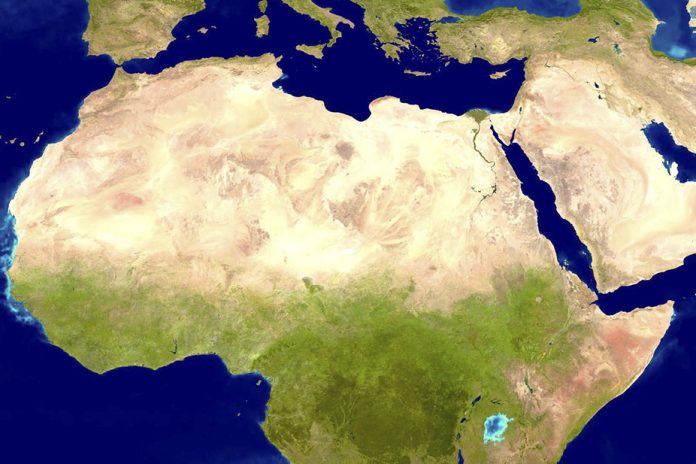
Whenever I visit the Sahara I am struck by how sunny and hot it is and how clear the sky can be. Aside from a few oases there is little vegetation, and most of the world’s largest desert is covered with rocks, sand and sand dunes. The Saharan sun is powerful enough to provide Earth with significant solar energy.

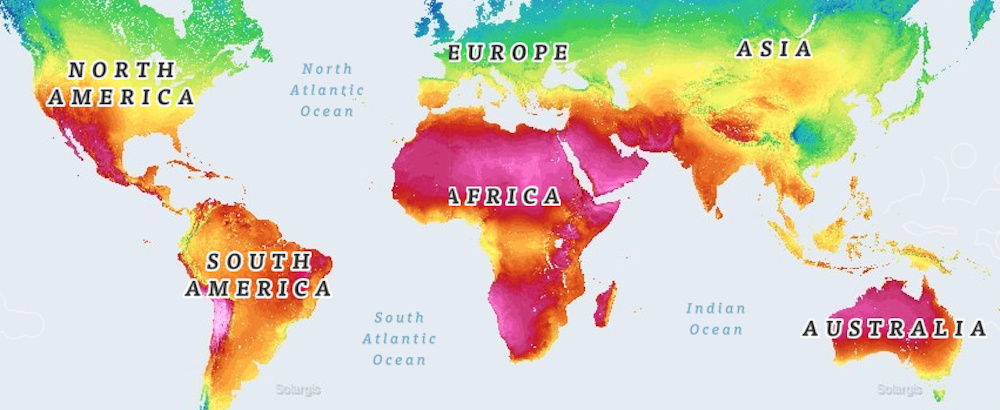
The statistics are mind-boggling. If the desert were a country, it would be fifth biggest in the world – it’s larger than Brazil and slightly smaller than China and the US. Each square metre receives, on average, between 2,000 and 3,000 kilowatt hours of solar energy per year, according to NASA estimates. Given the Sahara covers about 9m km², that means the total energy available – that is, if every inch of the desert soaked up every drop of the sun’s energy – is more than 22 billion gigawatt hours (GWh) a year.

This is again a big number that requires some context: it means that a hypothetical solar farm that covered the entire desert would produce 2,000 times more energy than even the largest power stations in the world, which generate barely 100,000 GWh a year. In fact, its output would be equivalent to more than 36 billion barrels of oil per day – that’s around five barrels per person per day. In this scenario, the Sahara could potentially produce more than seven times the electricity requirements of Europe, with almost no carbon emissions.

Global horizontal irradiation, a measure of how much solar power received per year. Global Solar Atlas / World Bank

What’s more, the Sahara also has the advantage of being very close to Europe. The shortest distance between North Africa and Europe is just 15km at the Strait of Gibraltar. But even much further distances, across the main width of the Mediterranean, are perfectly practical – after all, the world’s longest underwater power cable runs for nearly 600km between Norway and the Netherlands.

Over the past decade or so, scientists (including me and my colleagues) have looked at how desert solar could meet increasing local energy demand and eventually power Europe too – and how this might work in practice. And these academic insights have been translated in serious plans. The highest profile attempt was Desertec, a project announced in 2009 that quickly acquired lots of funding from various banks and energy firms before largely collapsing when most investors pulled out five years later, citing high costs. Such projects are held back by a variety of political, commercial and social factors, including a lack of rapid development in the region.

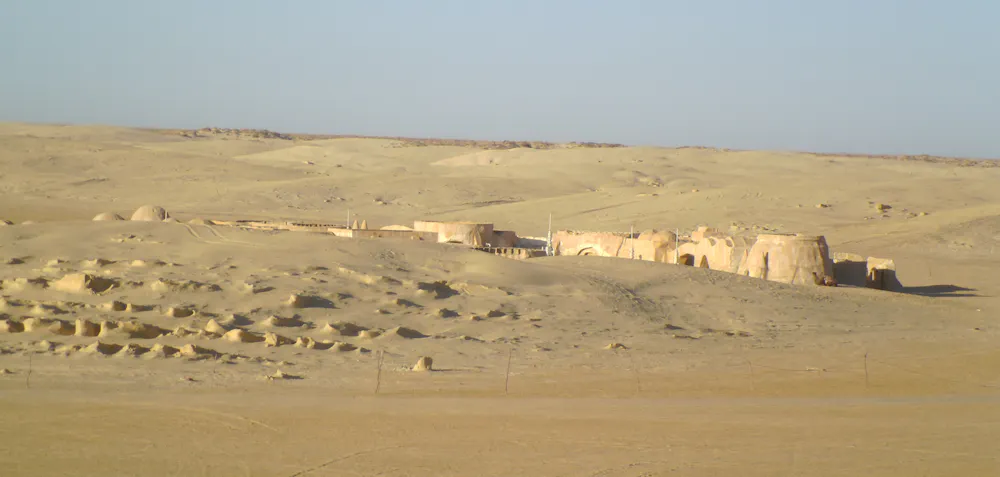
The planet Tatooine from the Star Wars movies was filmed in southern Tunisia. Amin Al-Habaibeh, Author provided

More recent proposals include the TuNur project in Tunisia, which aims to power more than 2m European homes, or the Noor Complex Solar Power Plant in Morocco which also aims to export energy to Europe.

Two technologies

There are two practical technologies at the moment to generate solar electricity within this context: concentrated solar power (CSP) and regular photovoltaic solar panels. Each has its pros and cons.

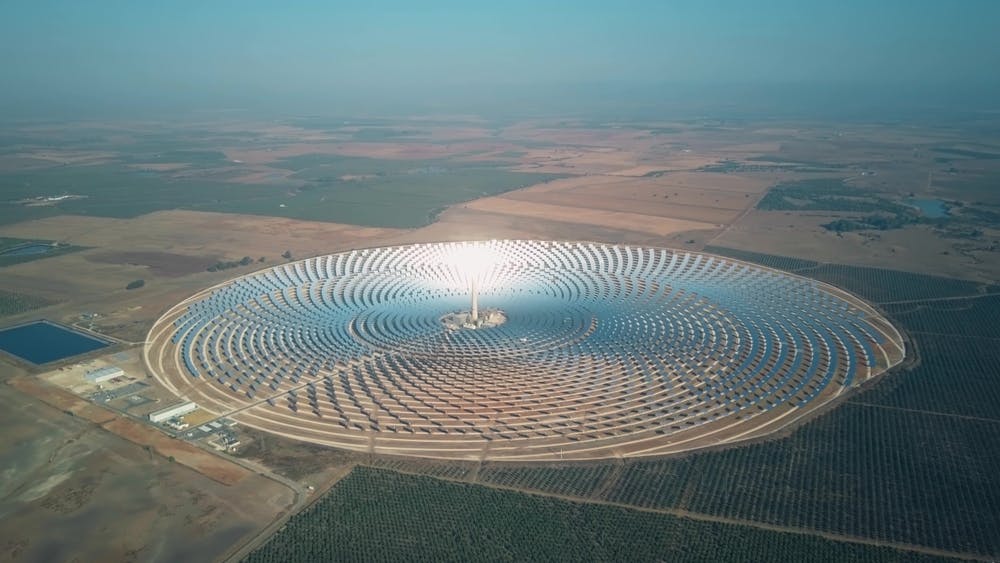
Concentrated solar power uses lenses or mirrors to focus the sun’s energy in one spot, which becomes incredibly hot. This heat then generates electricity through conventional steam turbines. Some systems use molten salt to store energy, allowing electricity to also be produced at night.

A concentrated solar plant near Seville, Spain. The mirrors focus the sun’s energy on the tower in the centre. Novikov Aleksey / shutterstock

CSP seems to be more suitable to the Sahara due to the direct sun, lack of clouds and high temperatures which makes it more efficient. However the lenses and mirrors could be covered by sand storms, while the turbine and steam heating systems remain complex technologies. But the most important drawback of the technology is its use of scarce water resources.

Photovoltaic solar panels instead convert the sun’s energy to electricity directly using semiconductors. It is the most common type of solar power as it can be either connected to the grid or distributed for small-scale use on individual buildings. Also, it provides reasonable output in cloudy weather.

But one of the drawbacks is that when the panels get too hot their efficiency drops. This isn’t ideal in a part of the world where summer temperatures can easily exceed 45℃ in the shade, and given that demand for energy for air conditioning is strongest during the hottest parts of the day. Another problem is that sand storms could cover the panels, further reducing their efficiency.

Both technologies might need some amount of water to clean the mirrors and panels depending on the weather, which also makes water an important factor to consider. Most researchers suggest integrating the two main technologies to develop a hybrid system.

Just a small portion of the Sahara could produce as much energy as the entire continent of Africa does at present. As solar technology improves, things will only get cheaper and more efficient. The Sahara may be inhospitable for most plants and animals, but it could bring sustainable energy to life across North Africa – and beyond.


Click here to subscribe to our climate action newsletter. Climate change is inevitable. Our response to it isn’t.The Conversation

Amin Al-Habaibeh, Professor of Intelligent Engineering Systems, Nottingham Trent University

This article is republished from The Conversation under a Creative Commons license. Read the original article.

Two charged of stealing 140m from Transguard company in Dubai.

BY PRUDENCE WANZA – Two people, a man and a woman have been arraigned in court for stealing 5million Dirhams equivalent to Ksh. 140m. 
They are alleged to have commited the crime on the 4th of March 2018 at Deira city center mall in Dubai with others that were not before court and stole Sh. 140m which was cash on transit and property of Transguard Company in Dubai.

The two, Rebecca Mueni Musau and George Gitau Maina are also facing charges of being in possession of money believed to be stolen. 
It is alleged that at Kamulu Settlement scheme within Machakos County where she was being detained by National Police Service officers she had in her possession Ksh. 13m which was believed to be stolen. 
On the other hand on 6th November, 2018 at Mwihoko village in Githurai 45 where he was being detained by National Police Service officers he was found in possession of Ksh. 240,000 which was believed to be stolen. 

Appearing before the Chief Magistrate, Francis Andayi at the Milimani Law Courts they denied the charges. 
According to the prosecution, the two were out on police bond and they do not oppose the current terms of the bond. However, they will be required to present themselves at the DCI headquarters in order to be processed. 
The hearing of the case will start tomorrow after an application by the prosecution to have a special hearing was accepted by the court, since a witness from Dubai is already in Kenya for purposes of his evidence being taken by the court. 

Two plead guilty to stealing tablets meant for huduma namba registration.

BY PRUDENCE WANZA – Two men have pleaded guilty to stealing tablets meant for the ongoing huduma namba registration.

The accused, Adams Mulati and Timothy Kiswii appeared before Chief Magistrate, Francis Andayi.
The two were charged separately. Adams Mulati, is alleged to have stolen two tablets make Idemia Morph valued at Ksh. 70,000 at government press offices while Timothy Kiswii is alleged to have stolen one tablet of the same make worth Sh. 35,000 meant for huduma namba registration.
They however claimed that their intention was not to steal the tablet and that the tablets they were found with were not able to install the software for the registration and therefore they used them as phones.
But just before the hearing of the facts of the case, the two accused persons changed their plea and pleaded guilty to the charges before the hearing of the facts of the case.
They will be released on a bond of Sh. 50,000 or an alternative cash bail of Sh. 30,000.

Kenyan avocados cleared to enter the expansive Chinese market

Kenyan farmers will now export their popular hass avocados to China following a trade deal signed when President Kenyatta met his Chinese counterpart Xi Jinping in Beijing today.

The signing of the agreement which makes Kenya the first African nation to export avocados to the Asian nation with a market of over 1.4 billion consumers comes after a long and comprehensive approval process that included Chinese experts visiting Kenyan farmers.

It is estimated that when the agreement is fully implemented, the Chinese market will absorb over 40 percent of Kenya’s avocado produce, making it one of the largest importers of the fruit. Other famous destinations of Kenyan avocado include Europe and the US.

The signing of the protocol on sanitary and phytosanitary (an agreement relating to the health of plants, especially with respect to the rules of international trade)requirements for the export of frozen avocado was the last major hurdle for the Kenyan crop to be accepted in the highly regulated but lucrative Chinese market.

Avocado becomes the second farm produce from Kenya to access the expansive Chinese horticultural market after Stevia and will be followed by 13 other priority farm produce among them flowers, mangoes, French beans, peanut, vegetables, meat, herbs, bixa and macadamia.

The meeting between Presidents Kenyatta and Xi Jinping and their delegations focused on promoting economic and trade exchange in 8 key initiatives identified during the Forum on China-Africa Cooperation (FOCAC) meeting held in Beijing last year. These initiatives include industrial promotion, trade facilitation, infrastructure connectivity, green development and people-to-people exchange. Others are capacity building, healthcare, and peace and security.

In addition to the avocado deal, President Kenyatta witnessed the signing of an agreement on Economic and Technical Cooperation covering all sectors of mutual interest and an MOU on joint promotion of the implementation of the 8 FOCAC priority areas.

President Kenyatta is in Beijing, China for a three-day working tour where he will also attend the Second Belt and Road Forum (BRF) for International Cooperation that will be officially opened by President Xi Jinping on Friday.

The President is accompanied by Cabinet Secretaries Peter Munya (Trade), Dr.Monica Juma (Foreign Affairs) and James Macharia (Infrastructure) among other senior government officials.

The BRF conference at the China National Convention Centre (CNCC) is being attended by world leaders from 37 countries, 5000 delegates drawn from 150 nations and representatives of 90 international organizations.

During the bilateral talks held at the Great Hall of the People in central Beijing, President Kenyatta applauded China’s continued readiness to open its market to Kenyan products.

He said the solid partnership between the two countries has brought great benefits to the people of Kenya especially in areas of poverty alleviation and economic development.

On his part, President Xi Jinping thanked President Kenyatta for attending both the first BRF conference held in May 2017 as well as the current summit saying the Kenyan leader is a witness and core participant of the globally transformative Belt and Road Initiative (BRI) which aims at promoting global growth and economy through policy coordination among participating economies, infrastructure connectivity, trade investment and industrial cooperation.

President Xi Jinping further congratulated President Kenyatta for pursuing national reconciliation after his re-election in 2017 which he said has created a conducive environment for the implementation of the Kenyan government’s big 4 development agenda.

Speaking to the media shortly after the signing of the agreement on the export of frozen avocadoes into the Chinese market, Trade CS Peter Munya welcomed the deal and assured that it will immensely benefit Kenyan farmers especially small-holder growers of the crop by not only expanding the market but also improving the prices.

CS Munya encouraged farmers in avocado growing counties to take advantage of the new market by increasing the volumes of production and enhancing quality standards to meet the stringent Chinese regulations.

The BRI, started by China in its efforts to boost people-to-people exchanges, brings together over 150 countries from Africa, Europe, Asia, the Middle East and Latin America. Kenya and South Africa are key participants of the BRI from the African continent.

In recent years, China has grown to become one of Kenya’s key development partners, a relationship that has among other successes led to the implementation of key infrastructure projects among them the Standard Gauge Railway (SGR) and several key roads.

In separate events, President Kenyatta met and held talks with the First Vice Premier of the Communist Party of China Han Zheng during which the two leaders discussed the strengthening relations between Kenya and China. 

The Head of State also met the Managing Director of the International Monetary Fund Christine Lagarde. 

Create a free account, or log in.

Gain access to read this content, plus limited free content.

Yes! I would like to receive new content and updates.

Sponsored Ad

Ad 1
Ad 2
Ad 3
Ad 4
Ad 5
Ad 6